Wor(l)dplay

This column is a reprint from Unwinnable Monthly #189. If you like what you see, grab the magazine for less than ten dollars, or subscribe and get all future magazines for half price.
———
Interfacing in the millennium.
———
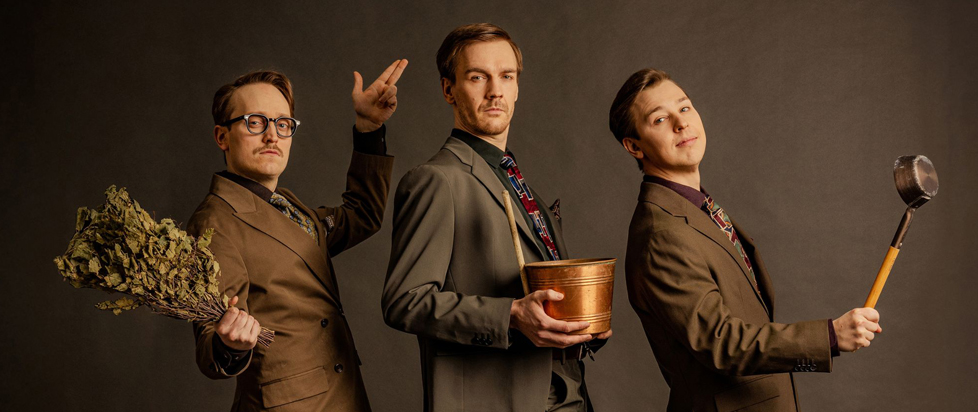
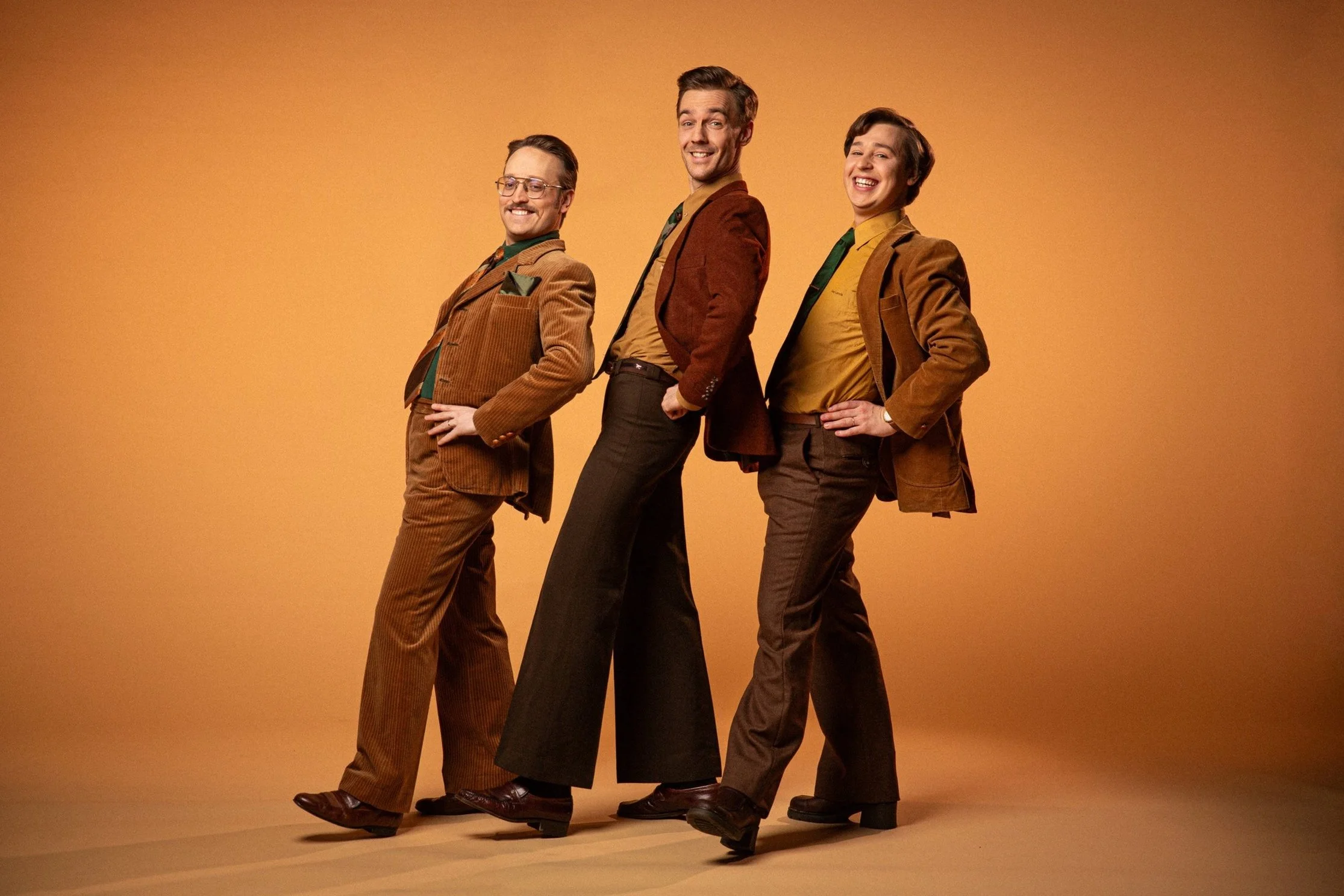
With the understanding that we are all coping with The State of the World in different ways I do think that I should give my poor housemate a break from KAJ, the Finland-Swedish comedy group that have spent the last two months destroying my Spotify algorithm and teaching me increasingly specific facts about Northern Europe. It is not particularly out of character for me to drench my home in a foreign language for months at a time but this is still a pretty unique iteration of these little lapses of insanity, and I’m finding KAJ to be a good brain project in a different way than when I was, say, really into K-pop, or in college and having an Einstürzende Neubauten-related psychotic break.
KAJ are refreshing because, to be blunt, they aren’t for me. The catchy Eurovision banger mass appeal of “Bara Bada Bastu” is the dusting of leaves over the pit trap back catalog of niche bullshit. Their bread and butter is wordplay-dense parodic comedy in an extremely specific dialect of Finland-Swedish, making songs about being from that extremely specific area of Swedish-speaking Finland. Before “Bara Bada Bastu” their biggest hit was “Jåo Nåo E Ja Jåo Yolo Ja Nåo,” a song I have to give a multi-paragraph explanation of before I show it to anyone (it’s a tongue twister in heavy dialect about an old guy trying to prove to the kids that he’s cool). They’ve written two musicals and one is about Ostrobothnian separatists and the other is about the cheapest cruise line on the Baltic Sea. I want to be clear that the vast majority of the time I have no idea what they are talking about. There is nothing in their career that should appeal to an American Midwesterner except the fact that every time they mention how bad the roads are in Vörå I feel overwhelmed by international camaraderie and brotherhood. They are not making music for a global audience. They regularly joke about how they can’t even make music for a national audience. They are making music for themselves and for people they see at the grocery store and if the rest of us want to tune in, that’s great, but they’re not going to switch to standard Swedish for you.

Now Eurovision has boosted their international profile to the extreme, and so the interesting thing that’s happening is that there is a sudden demand for translations of all this extremely culturally specific and often quite linguistically complicated content. Fan translators are the backbone of any international fandom, but I’ve never seen such an engaged and diverse lot as the (I assume mostly amateur) translators of KAJ’s older stuff, and a huge aspect of that seems to be because translating the things they make is a hard fucking job. I have never, for example, seen someone post an English lyric video with some words left in the original language because they couldn’t figure out a decent translation. Fan translated videos will routinely have disclaimers at the beginning about it only being one of many possible interpretations, and often two separate translators will arrive at widely different decisions on how to translate a specific word or concept. Then there’s the secondary level of wordplay or connotation – KAJ have a pun-to-lyric ratio heretofore never encountered in nature – and after everything else there’s still cultural context, which is key to understanding tons of their music and often has to be explained in the corner of the screen like a DVD bonus feature in the six seconds that a line is being sung. Some of these videos are annotated like academic texts! People are doing real work to bring Vöråcore to the masses, and they’re doing it for free, out of the love in their hearts for some guys from Finland. (Is this talko? I’m unsure. The joke is there. I’m workshopping it.)
The side effect of the small size of the fandom, the extreme specificity of the culture and the lack of strictness surrounding the music itself is that it has become a great example of translation as collaborative work. Often someone will post a translated lyrics video and actively ask for help refining certain parts, and then the meat of that translation ends up happening not in the implied canon of the video itself but in the intermediate space of the comments, where it might never come to a definite conclusion, and where the translating process is left open for others to read through or engage with. It means that as international fans communicating through the (regrettable) lingua franca of English we’re not being handed a doctrinal translation, or word-of-God anything, but are instead witnessing others work through their approach to a complicated subject matter and are engaging with one of many possible versions of what they’ve created. In general, the repeated emphasis that there is no one correct translation of any of KAJ’s work just serves to highlight the fluidity, imprecision and playfulness of all language, which is something that seems core to the ethos of a group that cut their teeth on dialect and geographic specificity, on the opposite of mass appeal.
I have been finding all this extremely refreshing. It’s freeing to be on the periphery of the periphery of something, to know that you will never entirely understand it even though you love it and respect it and want to learn about it, and to accept that as a feature, not a bug. We are not exposed to this much in the States. We have the artistic anemia that comes with being constantly hooked up to a drip of ourselves. We exported our culture globally and proceeded to become broadly allergic to the rest of the globe, and with that to any whiff of foreignness, buy-in or lack of immediate and complete comprehension. If we do not know it, we do not want it. I am not going to blame every societal ill on “[X] EXPLAINED!!” YouTube videos but I am going to blame a lot of societal ills on them. I think of people I know who can’t watch anything with subtitles (the shortened attention span of the digital content consumer will always push one towards familiar, digestible and structurally conservative) or who look up the end of the book before they reach it to avoid surprises (if you are always comfortable you are never challenged), and then I, maybe semi-unfairly, connect it with the xenophobic right-wing turn in this country, where hearing someone speak a different language in the grocery store turns into a bizarre, aggressive and incoherent push for complete cultural homogenization. We are just so extremely catered to and it has atrophied our capacity for critical thinking and maybe arguably turned us evil but also it cuts us off from tons of cool art and I think that is a bummer, spiritually. It is a key part of the human experience that you can listen to a song about deeply specific intra-community cultural dynamics in a country where you do not live and then immediately after listen to a song about old ladies trying to figure out whose kid you are, something that happens to me weekly. We are all so different and also all exactly the same. That’s hard to remember when you’re a crab in the bucket of the most cannibalistically dominant consumer culture ever created by man or beast and you can drive 15 hours in any direction without hitting another country but that’s also when it’s most important to remember, because otherwise we give in to the insular, incestuous idea that what we know is good and what we don’t know is bad, and look at where that’s gotten us.
I am not actually arguing that KAJ is praxis. I do think that it feels notable that this is a group of fans on the internet, not notoriously a respectful bunch, that have created a community around an artist that feels less like a product and more like a project. If you want to consume mindlessly you might find a couple of bops, but engaging with their work, as someone coming from outside of their context, requires not just an active effort but also accepting the limits of your understanding. Where they are from, what they are doing, how they are speaking, the jokes that they’re making: these are all core to who they are, which is why it’s so lovely and special that so many people from so many different places have gathered around them. That’s a lot of people doing the work to connect with other people. That’s what we’re here for.
———
Maddi Chilton is an internet artifact from St. Louis, Missouri. Follow her on Bluesky.