Videogames Are Mainstream. What Will Make Them Feel Like It?

This column is a reprint from Unwinnable Monthly #189. If you like what you see, grab the magazine for less than ten dollars, or subscribe and get all future magazines for half price.
———
What’s left when we’ve moved on.
———
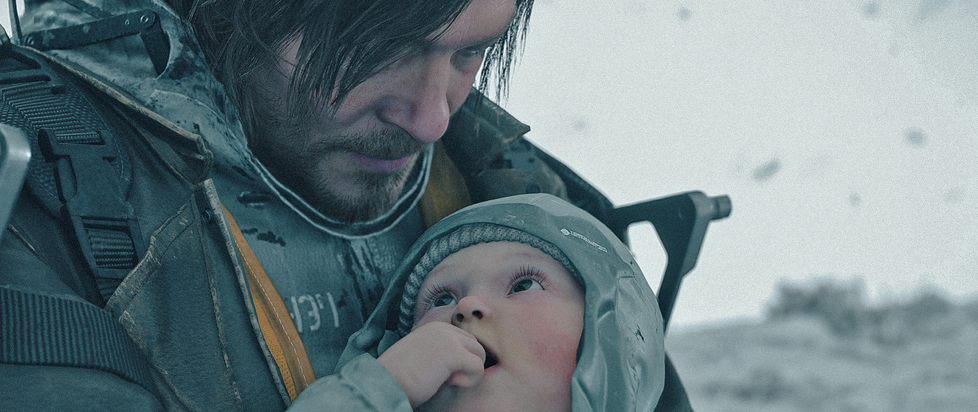
Prior to the release of Death Stranding 2 last month, its creator Hideo Kojima was interviewed in GQ. Kojima represents what I would call the vanguard of “games as culture” today. He’s interesting, cool and has great fashion. He works in other mediums like film. And, despite his statements to the contrary in that very interview, he’s seen as an auteur pushing the medium forward. Perhaps it’s fitting that when Death Stranding 2 did release, many reviews said it wasn’t as fresh as its predecessor.
When I was growing up in the 2000s, the vision of games as a hobby was quite restricted. Your choices (or your parents’ choices) were either Nintendo games or the vestiges of ’90s “gaming is for boys” marketing around games like Halo and Assassin’s Creed. Of course, there were other options, like RPGs on the PS2, but to learn about them you likely had to be funneled in through one of the aforementioned routes. The 2010s brought Gamergate, the mainstreaming of indies and a renewed focus on auteurs. In many ways the field has widened since then. The New York Times has a games section now. Yet I have never been successful pitching a “regular” magazine on a games piece, and I don’t think it’s just me. About half the people in the world play videogames of some kind, but coverage of them outside specialized outlets is almost nowhere. It’s fair to say that with a few exceptions, capital g–Gaming has failed to assimilate into either the popular consciousness or the level of elite culture. It’s expensive; it takes some learning; it still has the stink of that annoying ’90s advertising.

That doesn’t mean it’s nowhere. All of June, through showcases, MTG limited-edition card drops and console releases, made me reflect on the state of the medium now. Kojima’s interview itself struck me as exactly the kind of breaking-out of games as a cultural Thing in a mainstream outlet that we barely see. Games feel like they have all the ingredients to be culturally significant on the level of film or television and are in the eyeline of regular people more than ever before. Why, then, is there so little will to cover them?
Of course, I already know part of the answer: gaming outlets have shuttered and disproportionately laid off earlier-career writers who are themselves disproportionately women and people of color, those best suited to cover the new and interesting directions games are taking. In a healthier news ecosystem, surely some of those people could find more places to write about games in outlets that also write about other things. In practice, most sites that include a games section have closed or don’t accept freelance pitches. Or you could get lucky pitching the New Yorker, I suppose.
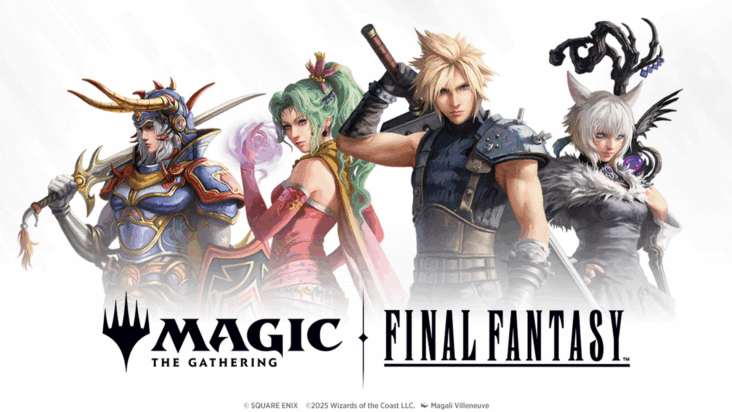
To discern how games are trying to break out of the self-imposed cultural box the hobby has shoved itself inside, let’s take a closer look at June. The Magic: The Gathering x Final Fantasy collab launched around the time of Summer Games Fest, leading to some unintentionally resonant photos. The Switch 2, and all its accessories, also launched. And SGF itself was full of games with battle passes, DLC updates, and tie-in merch.
I recently re-listened to Game Studies Study Buddies’ episode on Natasha Dow Schüll and noticed a question they asked in response to mobile game aesthetics, which are designed for their main audience of middle-aged women with disposable income. But, they asked, were these games actually designed to appeal to these women, or were they for people the designers imagined but that didn’t actually exist? As someone who hopes to one day be a middle-aged woman with disposable income, I can’t imagine finding that ur-mobile game style appealing. I had this question in mind when I watched SGF this year. Trailers seemed to target an imaginary person who wanted nothing more than to play Fortnite knockoffs in darker colors or was holding a torch for two or three big franchises. This, as we saw in event coverage, was not most people.
In smaller SGF showcases a lot of games reached for the same signifiers they have for the past few years: farming, small businesses, country life, gingham patterns. Despite my recent feelings on the subject, I don’t think this is coming from cultural conservatism. I think it’s an understandable impulse 1) on the part of the consumer, to seek comfort and even self-obstruction in digital chores, and 2) on the part of the designer, to catch a very popular trend. But the result is that the design of a lot of “cozy” games has begun to feel like a snake eating its own tail. It’s also hard to make, for example, a farming game that isn’t either laceratingly complicated or way too easy. Getting people in the work-game version of the machine zone (to riff on Schüll) is tough.
Then there’s physical things you can buy: cat ear headsets, pastel controllers, even outfits if you stream or have another kind of internet presence. (I would be interested to hear how much cozy streamers spend on their setups; if they don’t receive PR, I’d imagine it’s a lot.) But it’s easy to be pressed to buy these things even if you’re never on video; cute, cozy fits contain the promise that by wearing them, you can become so. In online and physical games too, collabs borrow advertising language from fashion (drops, dupes, etc.) and in the case of skins, let you pay for digital fashion.
Relatedly, gacha and blind boxes are everywhere right now; I’m sure everyone has heard of Labubus at this point. Gambling saturates every hobby, making them feel cheaper and more pressured. And despite this enshittification being load-bearing to the economics of the game industry, it’s what’s keeping the medium from being viewed as anything more than an expensive toy.
There’s a conversation on social media often about why games don’t have the same critical tradition as books, visual art or other generally respected art forms out there. Sometimes this is blamed on a lack of courage from writers to be harsh, which (the counterargument goes) is prevented by people writing contract, freelance or otherwise wanting to maintain access for the next review. Also, firing all your writers is going to make the critical consensus less robust. But I personally think the main reason for this critical hole is that, en masse, games refuse to market themselves as anything other than consumable products. Any growing-up the medium has done in my lifetime has just shifted them from toys to fashion, accessories or collectables; i.e., toys for grown-ups.

The best comparison is books criticism, which is facing the same problem as games but coming from the opposite direction. Booktok has made books into consumable items first and foremost, and the shift from reviewers to influencers being a main recommendation source has been, as with games, destructive to criticism (I can’t trust someone who will rate every book a 9/10, or someone who thinks Emily Henry is a good writer.) This means book sections have dwindled and pitching a book review has gotten even harder than pitching one for games. Both art forms have failed to establish themselves as art to an average person, or have been de-established as such, and have instead become consumer products. By extension, they’re taken less seriously as objects of criticism.
So, it seems my answer to “why aren’t videogames mainstream?” is a lack of mature, critical and supported coverage, underpinned by a sense that most people don’t take the medium seriously. Even for Kojima, respected for his fluency in other media, the games aspect of his work is given more legitimacy by being included in GQ. Arts sections seem to understand that there’s a limited amount of Artistic Value that can be drawn from an article about a big-budget shooter with purchasable boob-window outfits (I mean, at least if you’re not going to hire a games writer to spend a few weeks on it.)
Are games storytelling experiences, or are they vessels for battle passes and sponsored plastic crap? We’ve resigned ourselves to them being both. Yet one prevents the other; I can’t see the forest for the pop-up-infested trees. Overall, what drives people to write thoughtfully about an artistic medium is the sense that it has something meaningful to add, or that the wider world is being affected by it in some way. We know games can have that kind of impact; the question remains if they want to.
———
Emily Price is a freelance writer, digital editor, and PhD candidate in literature based in Brooklyn, New York. You can find her on Bluesky.