Your Character Sheet is Always On Hand: Print Weaver
This column is a reprint from Unwinnable Monthly #189. If you like what you see, grab the magazine for less than ten dollars, or subscribe and get all future magazines for half price.
———
This series of articles is made possible through the generous sponsorship of Exalted Funeral. While Exalted Funeral puts us in touch with our subjects, they have no input or approval in the final story.
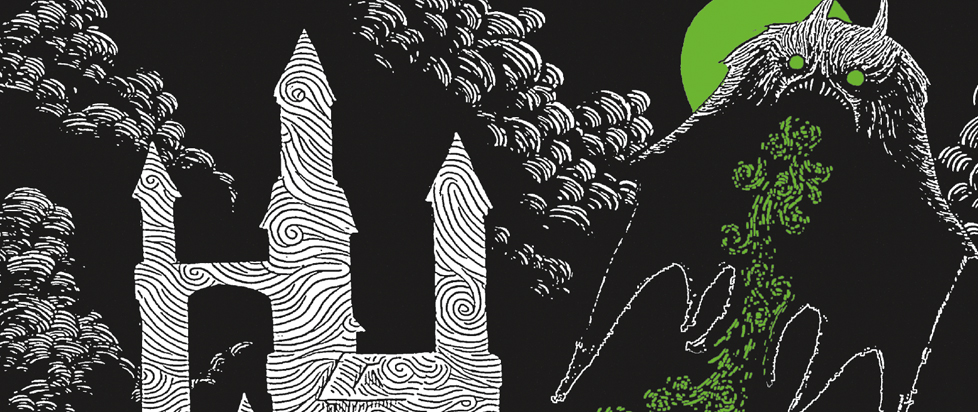
After the castle has fallen, the young witch Lilayara failed, the sleeping curse laid, Amarna’s Hand born, the last lantern blown out, and after you have already died thrice – Print Weaver begins. The Gothic palmistry-based system from N.L. Morrison unfolds from its unique form of character creation. Like your traveler, your character too was determined by fate – the very print marks of your fingers.
The loop – strong. The arch – unwavering. The whorl – cunning. The combinations of your prints across both hands guides character creation, with attributes and equipment pulling from different classes to create something unique to each player. Your thumbs determine armor, pointer fingers weapons, middle finger’s scrolls or combat equipment, ring fingers . . . rings and little finger starting items.
Consulting the manual’s tables, a left pointer finger with a Loop mark and a right pointer finger with an Arch mark indicates a cleric’s stone mace, though that could be paired with silk robes and a musical instrument. This classless and level-less system just made sense to Morrison, who tells me over email that “it didn’t make sense to need to track anything more. Every time you sit down at the table to play Print Weaver you’ve technically got your character sheet on hand.”
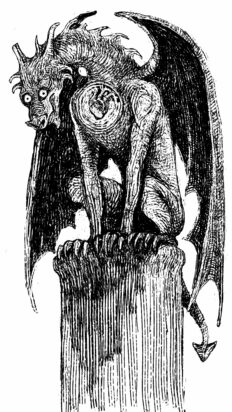
But, he explains, “real people are impossibly diverse.” Missing or otherwise concealed prints offer some players another, unknown blessing – the Obscure. These are admittedly the coolest offerings, with blessed Ink armor and Ink weapons like the Midnight Axe or Sunlight Blade. Ink is a proper noun in Print Weaver, the most valuable commodity in its dark fantasy lands. It’s the magical blood that powers the monsters who overrun the world and a powerful tool to protect the remaining enclaves of human settlement.
The End of Amarna adventure offers a structured introduction to the system in an original, Gothic fantasy setting built around Ink. “There are largely two types of sessions,” Morrison explains of the system’s structure. “One is where the main objective is traveling from a Safe Haven to a dungeon, facing foes, charting routes, while establishing outposts and shrines. The other is the payoff of all that networking, facing the source of the danger, entering a dungeon and fulfilling the Traveler’s role as protector of humanity’s last survivors.”
The End of Amarna is built to give players each type of session: dungeon diving through a fearsome enclave before travelling to the next, nearing the more concentrated forces of power in the dark land before finally the source of corruption is upon you. “Print Weaver to me is about poking around strange and dangerous landscapes,” Morrison says of the kinds of stories players can tell with his system. “Your Travelers sifting through the rubble of fallen settlements and doing your best to create safety and security in the face of it all.”
A standout monster/mechanic speaks to the kinds of stories Print Weaver. Though your Traveler resurrects in Safe Haven, its dead body remains on the field. Per the manual: “Devoid of its Print Marks, a corrupting influence of the wilderness fills the gaps, and a Printless rises.” The Printless rises with a hunger, a copy of its former self that grows more powerful from the ink of those it defeats. They can grow, changing form. And “if a Printless consumes a Traveler, they may not resurrect until the Printless is slain. “I think it adds to the burden that Travelers carry,” Morrison tells me. “Sure, you’re immortal, but being careless in death is dangerous towards the ultimate goal of safety.”
Print Weaver‘s dark fantasy setting and immortal but costly resurrection invokes some popular touchstones outside of tabletop. If you wanted to play Dark Souls or Bloodborne in tabletop, Print Weaver would work well enough, though its original setting of Amarna is both mechanically and aesthetically unique enough to offer something more to players than a facsimile of what they already know. And though Witch Hat Atelier wasn’t on Morrison’s radar, I can’t help but imagine fans of the manga’s inscription-based magical system making witches for their own campaigns.
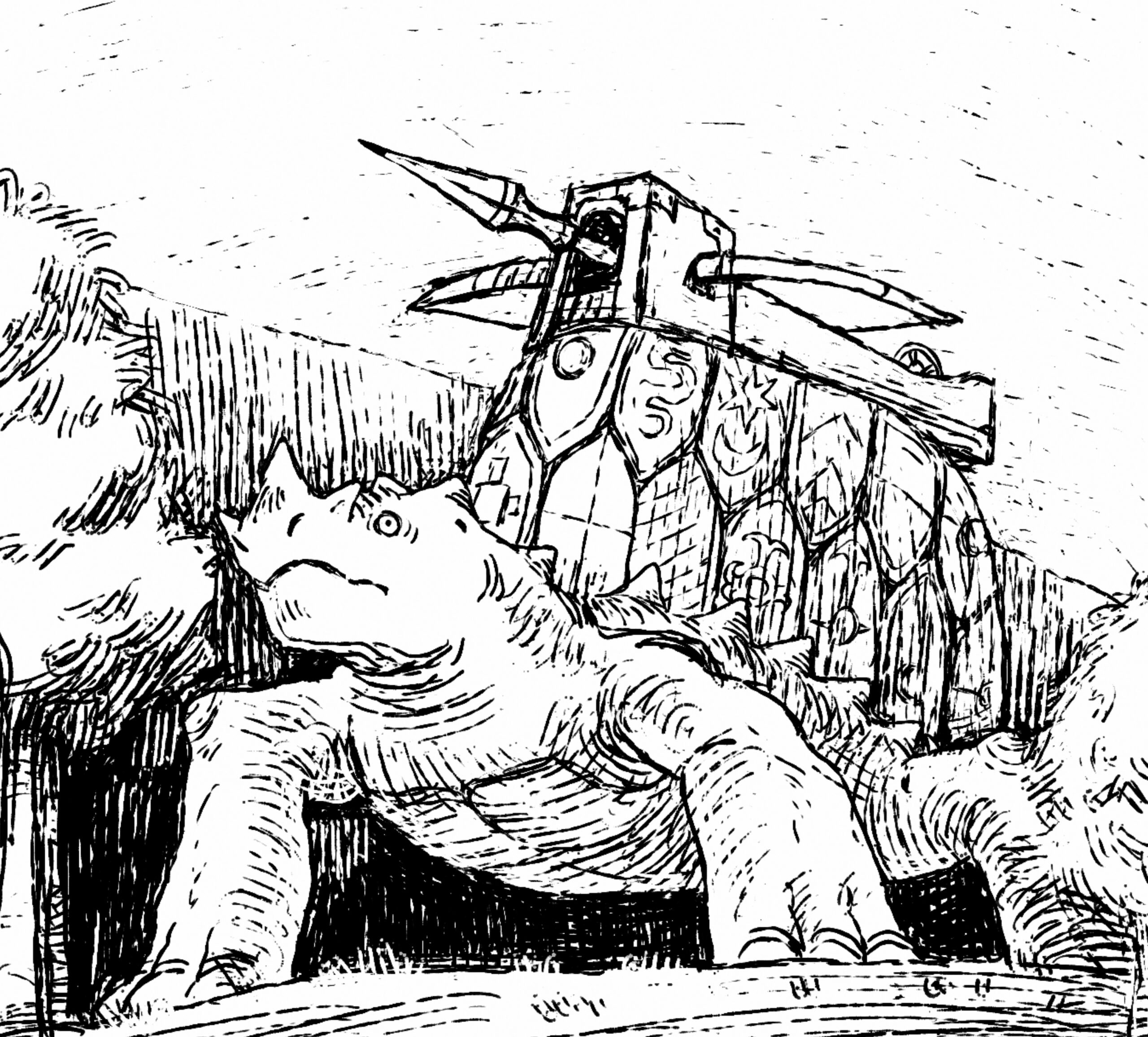
Morrison also mentions Dark Souls in reference to artist Yasmin Younane’s bestiary illustrations. While Morrison’s woodblock and tarot-esque illustration accompanies character creation and interior art in Print Weaver, Younane illustrated the End of Amarna‘s monsters. “Their work straddles the line between unsettling and charming in a way that the best Dark Souls enemies do,” Morrison says.
A fascination with print marks goes back to childhood forensic science summer camps and “an early love for Dr. Brennan on Bones.” Combined with popular culture about “creating original characters off of a rigid set of guidelines (think types of crystals in Steven Universe, to the blood colors and symbols of Homestuck’s trolls),” Print Weaver is a combination of two lifetime interests. “The rest just sort of happened.”
However you come, wherever you go, how you get there – your character sheet is always on hand.
* * *
Print Weaver is available now from Exalted Funeral.
———
Autumn Wright is a critic of all things apocalyptic. Follow them @theautumnwright.bsky.social.