Does Taste Matter?
You feel compelled to support great writing…
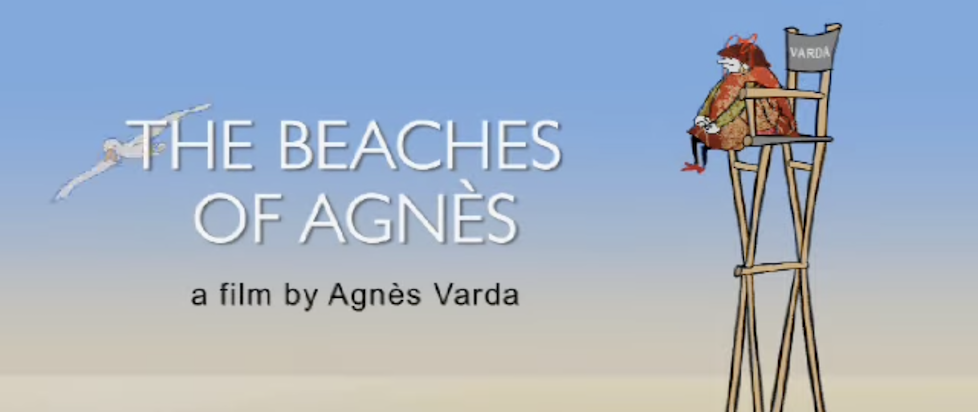
Artists have a way of capturing the depths of human experience, even the parts of us that are unknowable. In 2011, the filmmaker Werner Herzog told GQ: “We have to have our dark corners and the unexplained. We will become uninhabitable in a way an apartment will become uninhabitable if you illuminate every single dark corner and under the table and wherever – you cannot live in a house like this anymore.” The French New Wave filmmaker Agnès Varda once said “if we opened people up, we’d find landscapes.”
It is impossible to completely define ourselves or others by one aspect of their person, yet every day in our modern age we attempt to do just that. In particular, we tend to define one another by our taste. Whether it’s people getting loud about a director liking the movie Zootopia, or an article listing books that are “dating red flags”, it is commonplace on the internet to think we can easily encapsulate a person based on their favorite movies, books, games, etc.
With the world being so politically dire these days, it is admittedly not surprising for it to feel important that our media consumption is thoughtful or ethical in some way. The art we consume is one of the few places where we have at least somewhat of a choice in how our time is spent. When it comes to art, there is a sense that you really are what you eat, and one opinion can determine whether or not you’re a good or intellectually robust person. The way people talk about their taste gives the energy that they believe it is possible to punch the perfect ethical golden ticket of consumption. Some talk about their opinions as if there’s a way to dodge the accusations of bad taste while constantly pointing fingers at others, and that even when they themselves engage with “bad” art or artists, they somehow do it in a nuanced way that is always redeemable.
This constant chase for perfect taste in order to then perform it to others is often done in the name of moral or intellectual superiority. You think a movie is bad, so you deem yourself smarter than others who enjoy it. An artist has said or done something harmful, so you consider anyone who still engages with their work to be unethical. None of this is to say that I disagree with having taste or a moral compass. I’ve sworn off or boycotted plenty of artists, and I tend to be the snobbiest person amongst my friends tastewise, but what I find strange about these conversations is how much of the focus is about pocket-watching other people’s consumption instead of on the art or artists themselves.

It feels like an attempt to make stan wars intellectual. For years critics have bemoaned the way fandom and identification with art are the primary ways we engage with it in our times. It turns art into consumable capitalist products, and interprets any criticism of a work as an attack on the person enjoying it. Yet when we insult individuals for the art that they engage with, we contribute to this culture of identification. Defining others by their taste means that they weren’t wrong for defining themselves by it in the first place, a toxic feedback loop. Furthermore, it focuses completely on those who might happen to like or dislike a text rather than dissecting the text itself.
Living human beings, unlike works of art, don’t have easily definable endings to encapsulate what they represent. The internal monologues of any person are illegible to us, whereas we usually have the entirety of an artwork in front of us to interpret. Any human being’s inner life will always have a complexity that far exceeds even our most meticulous attempts to understand them. It would be silly to think that all of those murky depths could hinge on whether or not one happens to like a certain book, movie, or television show. Yet our taste must say something about who we are as people, right? The question becomes just how much of a “something” does taste actually say about us.
I believe that the art that has deeply moved me, as well as the art that I have disdain for, does say a lot about me. There are films and books and games and paintings that have cracked me open and feel integral to my core self. I strongly believe in having a “healthy” cultural diet. Still, I surrender that these large biomes of my being are still not the entire landscape. Some people might have better taste than others, but what that taste says about each person is hard to pin down. Toni Morrison once said: “You are not the work that you do, you are the person that you are.” One thing I love about this phrase is you could put anything in the first half, and the 2nd half would still ring true. You are not your work, or your taste, or your community, or your trauma, or whatever else I can’t list here. You are the totality of all of those things and more.
I don’t care to define how bad art is based on the hypothetical attributes of a person who might enjoy it, and I find it strange how often that’s become a go to way of scapegoating one’s criticisms of a text. I find it strange that we treat supporting an artist who has done something bad (which is still definitely criticizable) with the same level of vitriol if not worse than how we respond to the artist who actually committed the act we find so deplorable. I do often question, have a hard time understanding, and even turn my nose at certain people’s tastes, whether it be supporting particular artists or having views I disagree with on a work. But the crux of the discussion should be analyzing and critiquing the work or culture, not coming to categorical conclusions about random strangers.
———
Farouk Kannout is an Arab-American writer, cultural critic, and game developer. You can find him on Bluesky, or at a local independent theater in Chicago.