Orphan in the Beautiful World
You feel compelled to support great writing…

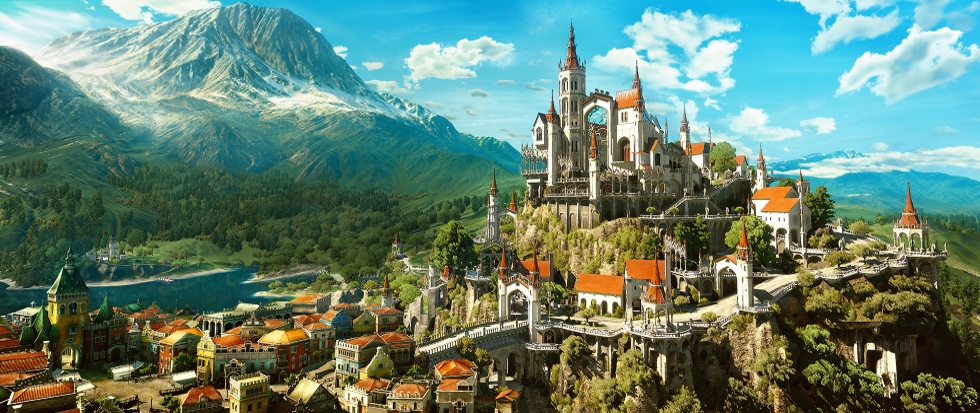
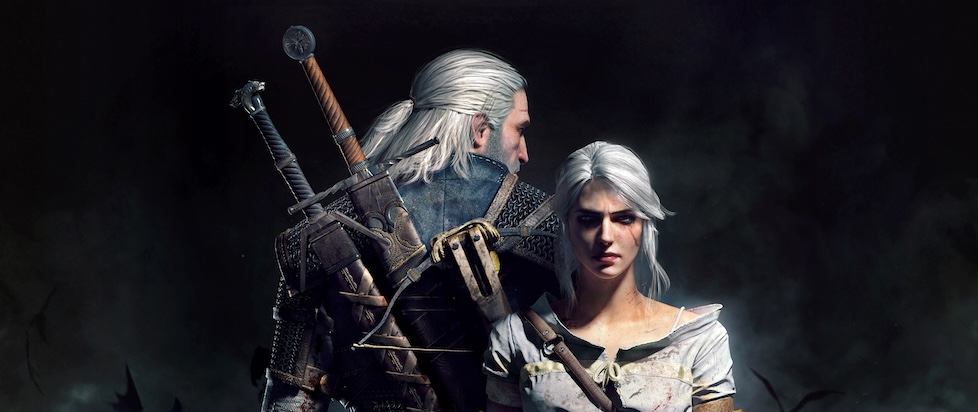
Throughout The Witcher 3, Geralt’s story takes place in a precarious world, where the good, the bad, and the ugly collaborate to compose a symphony about chaos under heaven. In his turbulent time, on the eve of great change, he embarks on a journey to find his beloved daughter. The clues of Ciri’s traces take him back and forth across different regions, from desolate swamps to bustling streets. Laden with fatigue, he sails to an archipelago, where the rugged beauty of snowy mountains, a blue sky, and the majestic sweep of ocean waves, combined with the ethereal track “The Fields of Ard Skellig,” bring me to the verge of tears.
Geralt wears his trademark medallion and wields dual blades. As an adept monster slayer, he is usually willing to exterminate monsters and beasts lurking in forests and deep caves for coin. Even in possession of superhuman capabilities, he can hardly resist the gravity of realpolitik and becomes involved in various bureaucratic arenas as a part-time mercenary. On the road, he finds himself stuck in the middle of mixed opinions, where malevolent cursing and great esteem are compelled to coexist. He is accused of coercing the poor, condemned as a murderer of nature, but also held in reverence as a defender of mankind. Some desperately vilify his deeds and consider him a freak addicted to killing and cursed by gods; others laud his prowess and treat him in a devout and respectful manner.
The collapse of order and tradition does not stop people from clinging to the hatred and misunderstanding ingrained in humanity. Caught between the threat of ferocious monsters and the frenzy of brutal persecution, most of them surrender to decadence without suffering too much torment from conscience. This morally gray world often pushes Geralt to the corner and compels him to make choices with little knowledge of their further implications. And it is absolutely okay to try and take a seemingly unbiased approach while attempting to avoid earning the title of “The World’s Most Laughable Centrist.” Yet, the paradox of assuming a neutral posture lies precisely in the fatalistic logic that an action without malice, when compared to one shaped by clear intent, can lead to even more regrettable and disastrous consequences. At last, the rhetoric of staying neutral is almost always reduced to a mockery of indecisiveness. However, this kind of questioning at least makes one thing perfectly clear: in a decadent world, where fallen people are dragging you down to their level and imbue you with indifference and whataboutism, you are always able to refuse passivity and remain true to your original aspiration. This is the philosophy of The Witcher.
Indeed, Geralt prefers self-reliance, but sometimes a lone wolf cannot single-handedly stand against an enemy as formidable as the Wild Hunt. Along the way, Geralt makes acquaintances with people from different walks of life. Many of them are recluses or outsiders walking on the edge of the mainstream – a fugitive sorceress, a notorious assassin, a dwarf swordsman, a berserker warrior, a guerrilla leader, etc. Before fighting Eredin’s army at Kaer Morhen, Geralt can travel across the continent and the islands to gather his scattered brothers-in-arms at the fortress. Each of them brings their strengths to a shared cause. As they are preparing for the coming battle in the courtyard, a mysterious yet enchanting dream becomes more explicit: a domain where individuals gifted with extraordinary powers and unique talents strive to make their own history according to a common code and a belief in camaraderie.
I hope this moment never ends, but I also know that all good things must. After the clang of crossing blades cease, as wisps of smoke rise from the fortress ruins, the grim fate of a dying trade and its fragmented schools has never felt more inevitable. The death of Vesemir is not just the loss of a warrior; it serves as a quiet reminder that the ties that once bound the Wolf School together are also loosening, adding a heavy, sorrowful tone over the entire story. Zhuang Zhou used to tell a short story of two stranded fish trying to survive by keeping each other moist with their own breath in a drying puddle. Instead of sympathizing with the spirit of mutual assistance, he declines pitiful thinking and suggests it should be better to go their separate ways and return to the vast, free-flowing rivers and lakes, like what Geralt and his brothers choose to do. A pleasant farewell is enough, until fate brings us together once more.
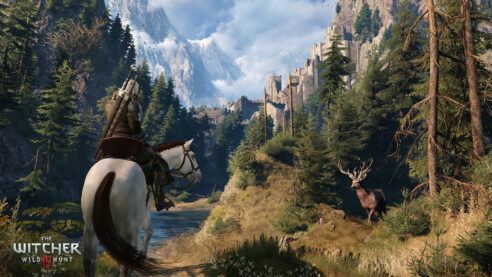
So I keep on my adventure as a righteous, itinerant person, losing myself in the rush of vengeance, laughing and fighting with staunch support, forging bonds in joy and battle alike, in a magical realm where honor and revenge are as sharp and clear as a sword’s edge. Meanwhile, there is another me lounging on the couch, controller gripped in my hands, forever a witness to Geralt’s trials and triumphs. When I am hearing the wind howling, a summer breeze slips past the window and caresses my face. When I am traversing the landscape on Roach’s back, I am pressing the button and moving the joystick. The experience of gaming always unfolds in two dimensions at once and, in a fleeting moment, an activity that is supposed to fill the emptiness of reality paradoxically confirms the physical solitude of my present existence.
———
Zonghang is a small-town boy from one side of the Pacific. He likes to talk about games and culture with a critical concern. And he still misses the days when he and Andrew would argue over whether Geralt should choose Triss or Yen.