Requiem for a Nightmare: The Dissonance of Resident Evil 9
Visit the MIT Press shop

This column is a reprint from Unwinnable Monthly #199. If you like what you see, grab the magazine for less than ten dollars, or subscribe and get all future magazines for half price.
———
We are what we’re afraid of.
———
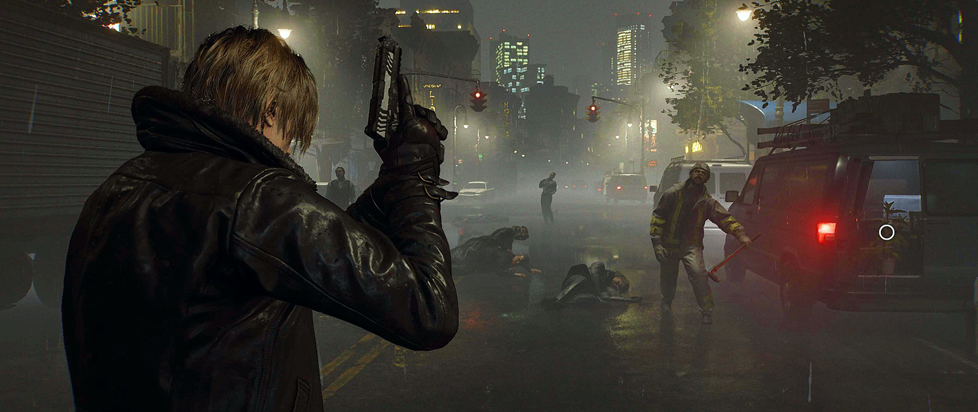
I have incredibly complicated feelings about Resident Evil Requiem. In many ways, I find it to be a perfect distillation of all the things fans loved about past franchise hits – the visceral and terrifying sections as Grace are the closest I’ve ever come to recreating the high of playing Resident Evil 7: Biohazard for the first time, and the Leon sections, while more Dead Rising than old-school Resident Evil, are mechanically pristine. I still can’t decide if the game letting you parry a live chainsaw is genius or incredibly stupid. The game is, in a word, fun, which by most reasonable metrics means I should call it a good game and leave it at that, because what else is a game supposed to be?
However, I also feel that Requiem frequently falls into the same trap as its predecessor, Village (you can read my full piece on that game here). Village tried very, very hard to demonstrate its fealty to the games that came before it, and more often than not ended up full of sound and fury, signifying nothing. While I don’t feel that Requiem fails on a conceptual level in the way Village did, it gets in its own way in its attempts to pay homage to two very separate but equally real versions of the franchise, leading to an uneven sense of tension and a general degradation of the emotional experience.
The crux of this problem lies in the fact that, over the course of the franchise’s life, it developed two distinct modes of play and thus two distinct groups of players. One group (of which I am a proud and stalwart member) enjoys the entries that privilege classic survival horror and underpowered protagonists – Resident Evils 1,2 and 7 are all excellent examples. The other group enjoys the version of Resident Evil crafted for Leon Kennedy’s franchise return in Resident Evil 4, as a badass Gary Stu who exemplifies a traditional videogame power fantasy. This is not to say that people cannot cross the streams and enjoy both types of games, but it does mean that saying you “like Resident Evil” can mean multiple, sometimes contradictory, things. And when both experiences are present in the same game, the thematic whiplash becomes unavoidable.
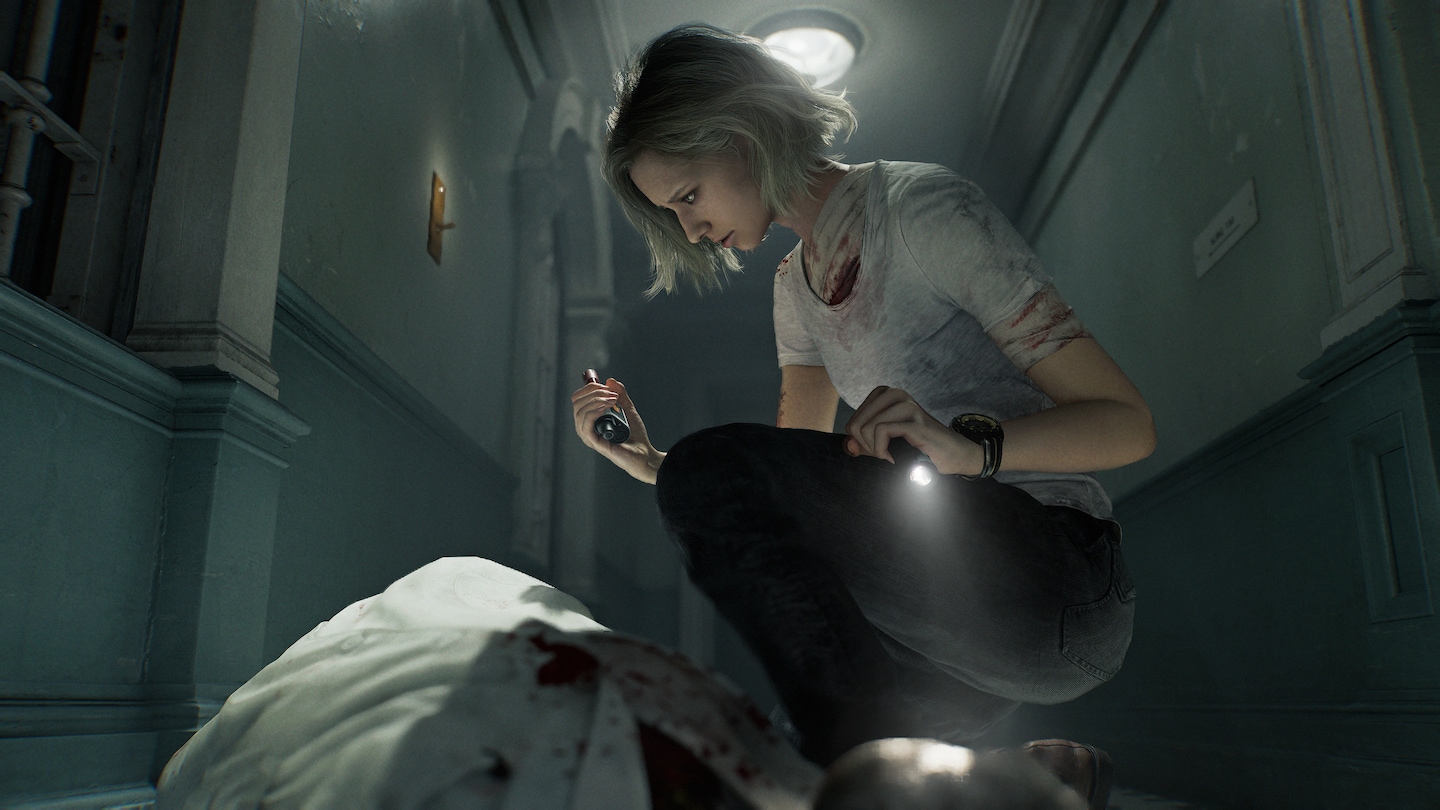
Ricocheting between the experience of ultimate powerlessness as Grace and being nigh invincible as Leon (who can, among other things, parry a live chainsaw) robs many of the game’s scariest moments of their power, because as bad as things get in the Grace sections, you know the next time Leon appears you’ll get to immediately one-shot the monster. The power breakdown between the two characters also has some pretty icky gender implications – Grace, a trained FBI analyst, spends the entire game as a bumbling, stuttering mess who is infuriatingly slow to pick up on the plot, while rookie cop Leon Kennedy appears not only inhumanly strong, but prescient. And yes, I know he’s probably done a lot of weird Spec Ops training since the events of RE2, but the difference in capabilities and affect is so stark that it doesn’t feel like it can be anything other than gendered.
Other internet denizens could credibly disagree with me on this through referring to the shifting POVs as necessary breaks in a high-octane horror experience – Leon Kennedy, in this reading, functions as healthy catharsis after a stretch of nerve-shredding gameplay as Grace. While I see that as a potential motivation for the way the game was structured, I don’t think it holds up as a justification for the simple reason that, clocking in at 15 hours for an average playthrough, the game is not meant to be beaten in a single sitting. Whereas something like a film needs moments of high and low tension so the audience doesn’t get too exhausted during the viewing, games of this length rightly function more as episodic TV – small chunks of high-intensity content, punctuated by cutscenes to tell you when you’re moving into the next segment (and maybe when it’s a good time to stop for the night). By building breaks into a medium that is already primed for multi-session consumption, the Leon sections sometimes felt more like unwelcome commercial breaks than an organic pause.
At the end of the day, I like Requiem. I think it is an enjoyable experience that writes a more effective love letter to the franchise than its immediate predecessor in almost all ways. But in attempting to address itself to all fans of the series equally, the whole ends up feeling like less than the sum of its parts. Since this is the second mainline game to truck in this same inward-gazing recreation of a past opus, and both times the game has been critically and popularly applauded, I am rapidly losing hope that Resident Evil will ever surprise me again.
———
Emma Kostopolus loves all things that go bump in the night. When not playing scary games, you can find her in the kitchen, scientifically perfecting the recipe for fudge brownies. She has an Instagram where she logs the food and art she makes, along with her many cats.