Dead Wives’ Society: Male Guilt and the Horror Game
This column is a reprint from Unwinnable Monthly #190. If you like what you see, grab the magazine for less than ten dollars, or subscribe and get all future magazines for half price.
———
We are what we’re afraid of.
———
It’s a tale as old as time: a man, wracked with guilt and remorse over the death of his one true love (for which he is, in some concrete but generally forgivable way, culpable for) finds himself on an Odyssey of terror in some remote location. This could be a small fictional resort town, a remote property in the American bayou or even an abandoned ship in space. The important things remain the same: there is a man, there are the horrors and there is the specter of the woman he loved and lost. Often literally, as a physical representation of the lost love is bound to appear and attempt to kill and/or eat him at some point.
The fascination with dead wives or girlfriends as the primary emotional driver for male horror protagonists is at once layered and absurdly simple. Why is the man here, in this horrific location? He received a communication from his lady love, telling him to come rescue her. Sometimes this feels fairly benign (Isaac in Dead Space was probably just trying to be a good person), but even if the man knows or assumes her to already be dead, a la James Sunderland or Ethan from the newer Resident Evils… he still makes his way to the ensuing action of the game in an attempt to find her. Thus, a pretty basic reading of this plot device would be akin to the Girlfriend-Macguffin: she is an object that needs to be saved from distress like the damsels of old. Not a particularly inspired piece of writing, but not utterly awful, either.
But that’s not the full picture, nor is his yearning and pure-of-heart desire for his love’s return the thing putting the pathos into the machine here. Rather, in all of the games listed above, the woman is dead, in some way, shape or form, because her relationship with the protagonist came to an end. Ethan’s wife left him, Isaac’s girlfriend did the same, and then both found themselves embroiled in bio-experimental nightmares. Ethan and Isaac are driven to find them because they feel guilt and a sense of responsibility for the woman’s fate. If only they’d been there, if only they had been a better partner…their journey as mediocre Orpheuses into the underworld is not necessarily to bring Eurydice back out with them, but to make themselves feel better through having made the effort. And James Sunderland, well…his guilt is on a whole other level. Hard to ever redeem yourself when it’s pretty openly understood that you murdered the woman you’re in Silent Hill to find.
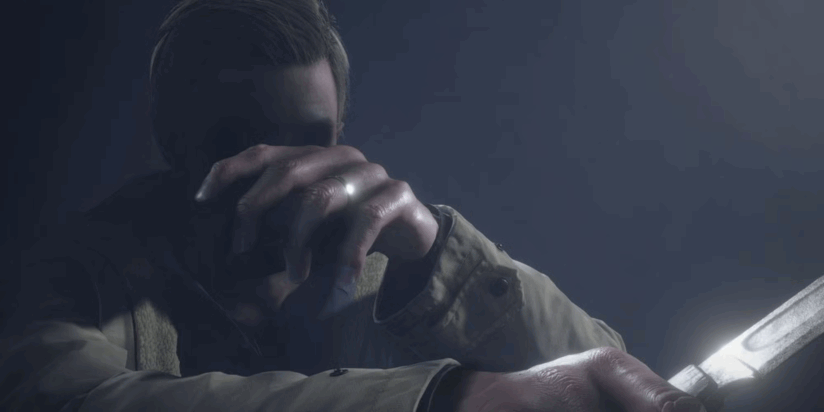
Understanding the woman here not as an object to obtain, but as a source of unrelenting guilt and self-torment, helps us to better understand her common role in these games. At least once, she will appear, but like the creatures in King’s Pet Sematary, have come back wrong. Attacking the protagonist and forcing him to defend himself from her violence has the thematic impact of him having to kill the thing he loves, because it turns out the thing he loves is actually super bad for him and he really probably shouldn’t be sad about her dying at all, right? Mia in Resident Evil does recover and a happy ending is achieved, but not before Ethan does a whole ton of agonizing over the monster his wife has become. The symbolic killing of their monster-brides can be read pretty easily as an absolution of their guilt – they had to kill her, don’t you see? She was going to destroy him. Once again, James is in a slightly different position – he does not enact violence against his game’s wife stand-in, but he watches Pyramid Head murder her multiple times, each time too passive and helpless to keep her alive.
The horror in each of these scenarios is ultimately not the literal mechanism wreaking havoc – it’s that these men were all unable to have an emotionally affirming and supportive relationship with a woman, and instead of ever reckoning with that through self-reflection, she has to turn into a horrible monster that he can kill for catharsis. As a woman in gaming spaces, I’m not sure I need to belabor the point that games don’t need more works that hinge on the abject mistreatment of female characters. But I do hope one day that this plotline will see itself through to a more positive conclusion – the man faces his monsters, takes accountability for his role in the dissolution of his marriage and experiences a catharsis not fundamentally tied up with the idea that women are emotional burdens better divested.
———
Emma Kostopolus loves all things that go bump in the night. When not playing scary games, you can find her in the kitchen, scientifically perfecting the recipe for fudge brownies. She has an Instagram where she logs the food and art she makes, along with her many cats.
Sign up for the forthcoming weekly Unwinnable digest!