Did Final Fantasy Tactics Predict the Rise of the Technocrats?
Visit the MIT Press shop

When Unwinnable put out the call for pitches for our Final Fantasy x Politics theme issue, we knew we’d get some great ones. In fact, we got so many that we wanted to share a few that we didn’t have room for in the monthly mag. Hence, like Final Fantasy itself, we’re offering a sequel: Final Fantasy x Politics-2: Nonvincere, a few extra pieces on Final Fantasy and Politics for Unwinnable on the web. Thank you as always for reading and for your support, which makes these theme issues and so much more possible!
———
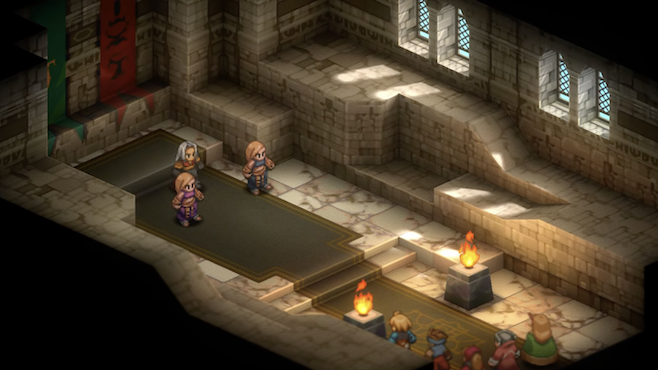
Final Fantasy Tactics follows a familiar arc for RPGs, namely that you play as a young do-gooder who gathers allies from different places to face an all-consuming crisis that culminates with the party killing a god. The game takes the concept of “high fantasy War of the Roses” as a jumping off point for a story about corruption, absolute power, and even class warfare. Its villains, the Knights Templar, use their institutional power and ties to the aristocracy as well as the monarchy to dominate the land of Ivalice.
They seek to usher in a new age using auracite stones to commune with the demonic Lucavi and rule the kingdom. Though the auracite stones bring nothing but strife and physically warp their wielders into horrific Hieronymous Bosch monsters, the Templar continue in their mad quest for domination, destroying the realm they seek to rule as well as themselves. In this cursed year of 2026, when technocrats seem to have more control over the world around us than ever, there are too many familiar notes to this song.
The idea that the ruling class will drain everyone and everything under them is not a new one. From Dracula to El Conde, vampirism is a simple but effective metaphor that’s been in use for centuries. In Final Fantasy Tactics, Marquis Elmdore is the most direct invocation. He’s never explicitly referred to as a vampire, but between his look and his use of blood-sucking abilities, the reference is pretty clear. There’s even an allusion to undeath in how Elmdore was mortally wounded during the War of the Lions only to be reanimated by the demonic auracite he held. This demonic possession is what binds Elmdore into the Templar’s conspiracy to destroy and remake the world under their leadership. The parallels between Final Fantasy Tactics and today go a bit deeper than this though.
Let’s consider how the Templars and their compatriots enacted their plan. They fomented the War of the Lions, a devastating civil war, to shed enough blood to summon Ultima, leader of the Lucavi demons and to keep Ivalice occupied while they gathered the auracite stones. The stones were given out to the various leaders of the conspiracy across the aristocracy, military, and clergy who all enjoyed great power at the cost of their corruption and demonic possession. This plunged Ivalice into turmoil great enough for the demonically-influenced Templar to step forward as leaders of a new age. They wear masks of benevolence, but their corrupted forms belie their true intentions.
I think a lot of the same things could be said for the technocratic ghouls that have come to dominate American life. The various billionaires and “visionaries” (Elon Musk, Mark Zuckerberg, Sam Altman, Peter Thiel, etc) could be seen as our version of the Templars, powerful men who have used their wealth and power to solidify their positions deep within both state and society. The demonic auracite stones could be seen as any of their products that amass them greater power but have damning effects on everything else. Generative AI does massive ecological damage, poisons water supplies through their servers, and eliminates jobs for an already underpaid working class. Thiel’s surveillance firm Palantir threatens to destroy what little privacy and information security we still know. It’s apt for this comparison that the company’s name references powerful orbs that are eventually used to corrupt Middle-Earth. Like the Templar and their auracite, the real world billionaires produce parasitic products that amass power, but drain everything else.
There are limits to this metaphor. The Templar are explicitly religious and the technocrats largely aren’t. Thiel, with his doomsday prophecies, is a notable outlier. Additionally, unlike AI or mass surveillance, auracite was something given to humanity by demons. We are not so lucky; we made our evil corrupting gems ourselves.
So did Final Fantasy Tactics predict the rise of the technocrats? Probably not! Instead, the game recognized something more timeless: there will always be those that seek power for its own sake and are willing to blow up the world to do it. The Templar, the aristocracy, the clergy, and the real life technocrats of today could’ve used their considerable resources to help others or make the world around them even slightly better, but they gave in to the worst of themselves instead. Final Fantasy Tactics didn’t predict anything, except that the cycles of power and oppression would continue and take on new shapes throughout time.
———
Chris Revelle is an educator and freelance writer based in Boston, MA. You can hear him screech about movies on the podcast Why Did We Watch This and see his TV takes over on Pajiba.