You Don’t Own Me
You feel compelled to support great writing…

This column is a reprint from Unwinnable Monthly #198. If you like what you see, grab the magazine for less than ten dollars, or subscribe and get all future magazines for half price.
———
Three fingers of analysis when two will do.
———
I recently watched Final Fantasy: The Spirits Within for the first time in twenty-five years (or perhaps… ever?). While I clearly remember the buzz around its release and have a memory of a memory of having seen it then, I admit most of the plot felt entirely unfamiliar to me. That may be because it’s just not very good and is thus unmemorable: a dystopian Earth is plagued by ghostly aliens (Phantoms) that drain the life (Gaia spirit) from living beings. Scientist Aki Ross (voiced by Ming-Na Wen), along with her mentor Dr. Sid (Donald Sutherland) and a rag-tag group of military mavericks, race to collect eight unique spirits from different life forms they believe can neutralize the threat without destroying the planet. As an overtly evil general (James Woods, much too comfortable in the role) pushes for a more aggressive planet-wide attack that could wipe out all life, the film becomes a clash between spiritual harmony and technological domination, ultimately framing survival as dependent on understanding the interconnected spirits within (!) all living things rather than overpowering them. A fine enough sci-fi plot (and an incredibly stacked voice cast), but nothing particularly innovative.
No, what I most easily recall about the film’s initial release is not the story but the almost breathless discussion about the technological breakthroughs Square Pictures was making with it, particularly when it came to leading lady Aki Ross, a character explicitly conceived as more than a role. She was imagined as a digital actress capable of appearing in multiple films, unbound by a single narrative or identity.
At the time, The Spirits Within presented itself as a glimpse of cinema’s future – a world in which human performers might be entirely replaced by digital ones. Its ambition was both technical and conceptual, proposing with its lead that a convincingly rendered female character could transcend a single story and become a reusable star. That premise now reads like the precursor to a cultural shift. The film’s attempt to create a controllable, endlessly reproducible woman anticipates many of the ethical issues that define today’s digital media landscape, from AI-generated imagery to posthumous film performances. What once seemed like an innovative experiment now functions as a lens through which we can examine how technology continues to reshape and destabilize the relationship between bodies, identity, and control. Aki Ross is not just an example of cutting-edge animation. She is an early manifestation of a persistent cultural desire to divorce the female body from the woman herself, and to make that body infinitely manipulable.
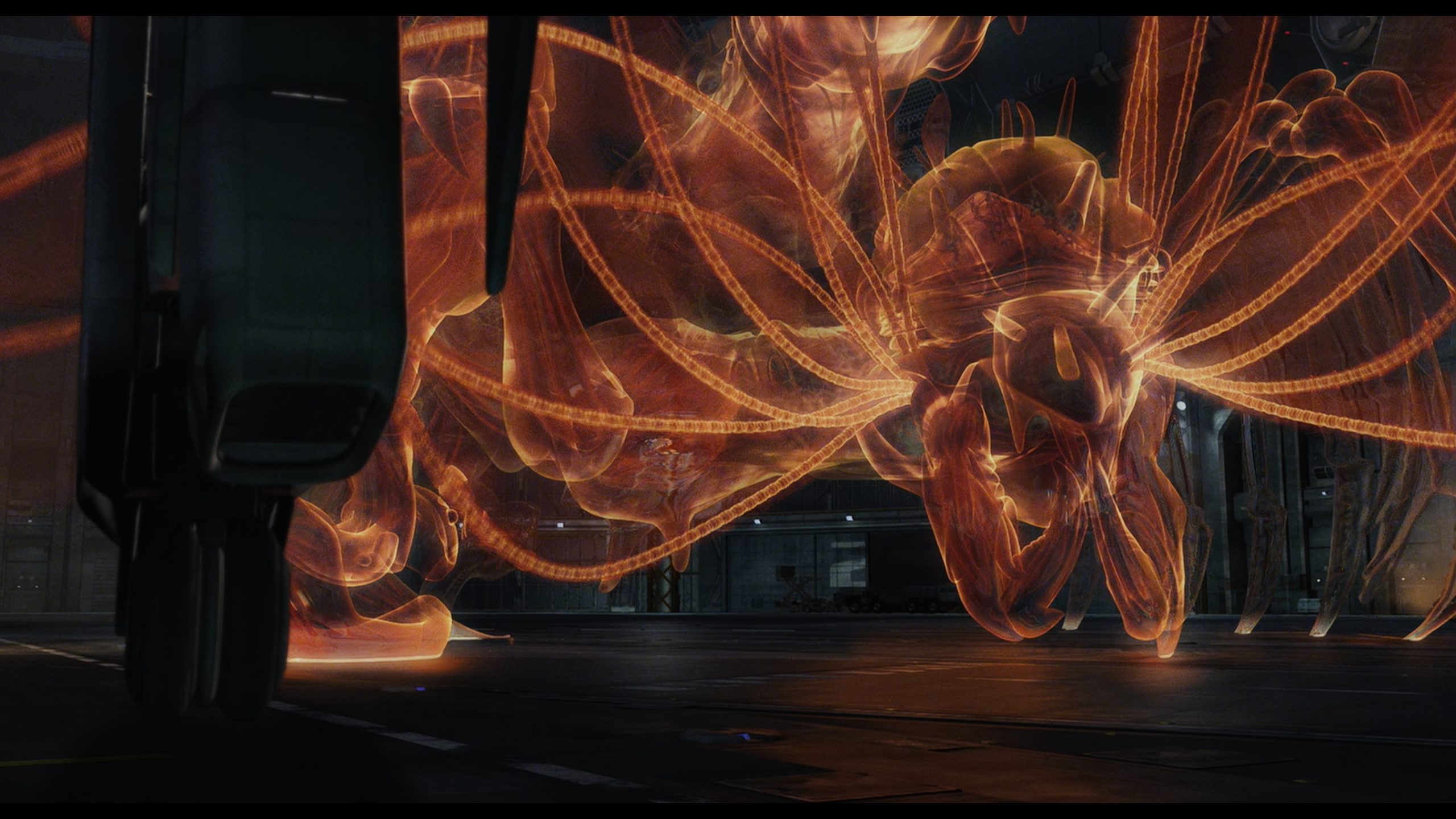
Aki Ross was not only presented as the easily controlled version of a leading lady but marketed as a woman, full stop – appearing in Maxim magazine as one of the “Top 100 Hottest Women of 2001” – yet was given no autonomy and no interiority beyond what was scripted for her. This separation played right into longstanding feminist critiques of cinema, where women’s bodies are often treated as surfaces for projection rather than sites of lived experience. In Aki’s case, the separation was complete – the body remained while the subject disappeared.
This dark separation is still present in today’s digital spaces. Generative AI has enabled internet users to take photographs of real women – and, increasingly, girls – and digitally “undress” them without consent. The body becomes raw material removed from personhood and open to alteration, exploitation and endless circulation. Aki Ross was constructed from scratch, but these contemporary AI examples begin with real women and strip away their control over how their image is used. Both approaches operate through the similar fantasy that the female body can be accessed without negotiation, but in one case the body is built to be owned and in the other it is captured and repurposed. In both, consent is either irrelevant or structurally impossible. The difference is technical, not ideological.
As her silky, endlessly undulating hair attests (I don’t think it hangs still for even a moment), Aki Ross was designed to approximate or even surpass an ideal – her features refined through countless iterations, all imperfections smoothed by code. This process mirrors the way generative AI produces hyper-standardized, homogenized images of feminine beauty. The result is a kind of normalized objectification, a narrowing of what counts as a desirable or even recognizable female body. Real women are then measured against these synthetic ideals, further entrenching literally impossible standards of beauty.

At the same time, the current digital culture has extended this logic beyond gender into questions of existence itself. The recent trend of inserting digital avatars of deceased actors into new films, creating performances that were never actually performed, raises similar concerns. Here, too, the body is severed from the subject, though the subject is not only absent but dead.
This complicates the idea of acting as an embodied art. A performance that can be generated posthumously challenges the idea that acting requires presence, intention or even life itself. Seen in this context, Aki Ross is less a failed experiment – The Spirits Within was the one and only film Square Pictures produced before folding, so her intended multi-film career never materialized – and more a prototype. She foreshadowed a media environment in which bodies can be fabricated, modified and circulated independently of the people they resemble or replace. Women and other marginalized performers have historically had to fight for equal recognition of their labor onscreen (and still do). The ability to recreate or extend a performance without the actor’s participation undermines any gains in those battles, creating a paradigm where actors can simply be replaced with their own digital avatars at will – theirs or otherwise.
Despite Aki Ross failing to “perform” as a digital star, the underlying idea clearly persisted and evolved. Contemporary technologies continue to blur the boundaries between human and digital performers. The questions raised by The Spirits Within are therefore not relics of an earlier technological experiment but ongoing concerns. Who owns a digital body? Who decides how it looks, moves and speaks? Whose interests are served by its existence?
While the film offers no direct answers, its ambitions expose the contours of a tenacious cultural fantasy – a world in which women’s bodies can be perfected, possessed, and deployed without resistance. In the age of generative AI, that fantasy is no longer confined to speculative cinema. It’s becoming digital infrastructure.
———
Despite writing about games for years, Sara Clemens has somehow dodged every single entry in the legendary Final Fantasy series. Known for confidently nodding during conversations about “chocobos” and “buster swords” while secretly Googling under the table, Sara was thrilled to realize watching a Y2K-era movie was all that was required to participate in this issue.

Sign up for the forthcoming weekly Unwinnable digest!