Beyond the Shadows: The Aesthetic Ambition of Assassin’s Creed
No ads. No AI. So many bats.
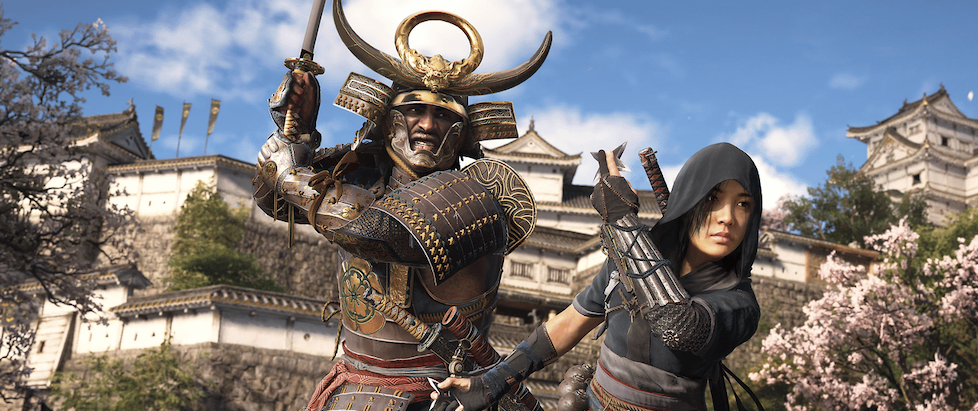
Assassin’s Creed: Shadows feels like the videogame equivalent of Bob Dylan’s 1975 comeback album Blood on the Tracks. After a period of delays, botched launches (here’s looking at you, Star Wars Outlaws) and internal scandals, Ubisoft found (some) saving grace after the success of Shadows that enabled the company to have a stronger negotiating position with Chinese technology giant Tencent, which now owns a 26.32% stake in the company (a source of contention in itself for some).
On artistic terms, is Shadows comparable for Ubisoft to what Blood on the Tracks was for Dylan? Or what the Water Lilies series were for Claude Monet’s late career?
Shadows may not be the greatest entry in the hallowed series but it is the most aesthetically ambitious. Main characters Yasuke and Naoe are unlikely to enter the pantheon of great protagonists alongside Ezio, Edward Kenway and Bayek. The gameplay, especially the Grand Theft Auto V-esque feature of switching between two (wildly different) characters is not as game-changing as Origins’ move to open-world RPG format. However, arguably, Shadows is the series most artistically beautiful game.
Riding your horse through the different provinces of Japan as the wind rustles up the leaves around you, or watching the reeds sway in the breeze by a stream capped by a red bridge, then watching the seasons change across the province as winter sets in and the landscape is suddenly covered in snow, is just breathtaking and never gets old.
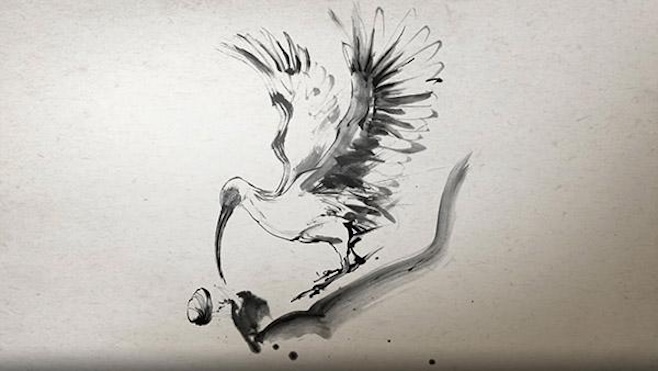
Naoe, Ibis and Clam, 2025.
Similarly, it was a major treat for an art historian to have the opportunity to stop my travels to paint a random scene from nature. Naoe indulges in a style of painting called Sumi-e painting. A genre of painting that originated in China and in Japan became closely associated with Zen Buddhism. Watching Naoe’s deft hand movements as she uses her brush in such an expert, elegant way, as she paints the scene with as little strokes as possible, makes the game (for me) worth the price of admission alone.
Mechanically, the game is equally polished. Its stealth is the best since Unity through Naoe, and combat through Yasuke is the most guttural and violently satisfying since Valhalla and Odyssey. The game was released with relatively few glitches and bugs and graphically the game feels sophisticated and modern. Story-wise it may not win any Nobel Prizes (though Bob Dylan, a songwriter, won the Nobel Prize for Literature), but Yasuke and Naoe are well-fleshed out companions through this beautiful world.
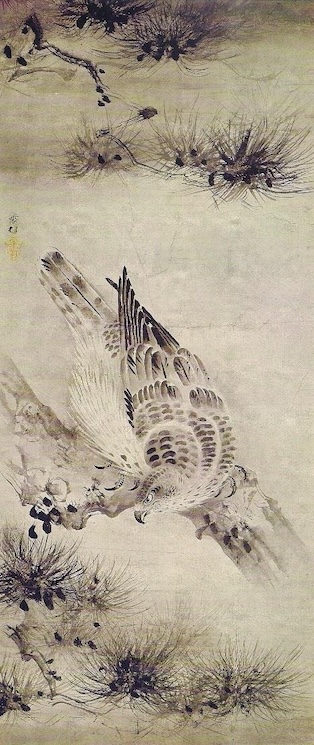
Sesson Shukei, Falcon Under a Pine, inkwash, 16th century.
One criticism that can be made of Shadows is the fact that it retreads familiar ground.
In the past Assassin’s Creed established a reputation for allowing gamers to experience historical settings barely covered in videogames. The Crusader setting of the first game, 16th century Constantinople in Revelations, the piratical Caribbean in Black Flag and Ancient Egypt in Origins, to name a few (why are there so few AAA games set in Ancient Egypt?). Due to these risks, Assassin’s Creed can be said to have had a comparable effect in getting consumers into history just as the Indiana Jones franchise did in the 1980s for archaeology and Jurassic Park for palaeontology in the 1990s. I can vouch for this personally – I would have arguably never have taken on a degree in art history had it not been for my immersion in the Ezio games; I went from vaulting through the Duomo of Florence to actually writing assignments on the Renaissance in the blissful blink of an eye.
With Shadows, however, it can be said that it is not breaking new ground in videogame terms. Other games take on and beautifully portray Medieval Japan, arguably more successfully – from Ghost of Tsushima, Ghost of Yotei, Sekiro, to Nioh and many others. Whlie Shadows’ take on the period is unique, it does feel like we’re videogame tourists familiar with the epoch; we’ve been there, done that and got the samurai t-shirt.
The recent leadership overhaul at Ubisoft has put familiar names such as Jean Guesdon (new Head of Content who has been working on the franchise since the first entry) and Martin Schellig (a veteran producer on the series) to the forefront. These names will be in charge of the newly launched Vantage Studios, owned by Tencent, and will oversee the series’ future.
It is a future that looks bright and anxious at the same time for fans. Beyond gaming, Assassin’s Creed is catching up with the latest trend in videogames like Fallout and The Last of Us with its own upcoming Netflix series, will see the introduction of a new setting for the franchise in Neronian Rome. Honestly, the idea of having a new setting and new protagonists in the series makes me anxious: We all remember how that last went down with the 2016 film, don’t we? But still, a Netflix Assassin’s Creed series is definitely exciting.
Even more exciting is the continued work on the next mainstream entry in the franchise, codenamed Hexe. A game which, apparently, will take greater risks than any other previous entry by taking the series into horror territory and placing it in a witchcraft setting somewhere (and sometime) in Germany. Could this be as great a revolution for the series as Origins was? I hope so (and yes, the series’ switch to large open-world RPG territory was a success – the disappointment of Mirage amply proves it).
Then of course there is the long-awaited remake of Black Flag on the pirate-infested horizon. So the future does look, in a post-Shadows era, positively exciting and tantalizing for this history-making franchise (pun very much intended). And hopefully it goes on to a career as long as successful as Bob Dylan’s.
———
Justin Fenech is an art historian and novelist from Malta. He is a lifelong videogame aficionado with a strong belief in the medium’s artistic and narrative potential. Find him on his blog and on Instagram.

Sign up for the forthcoming weekly Unwinnable digest!