Stepford Waifus: The Politics of Aesthetic Homogeneity in Final Fantasy
You feel compelled to support great writing…

This column is a reprint from Unwinnable Monthly #198. If you like what you see, grab the magazine for less than ten dollars, or subscribe and get all future magazines for half price.
———
We are what we’re afraid of.
———
Every time Unwinnable does a theme issue, I cringe internally, because I know I’m going to have to do some mental gymnastics to make it over the finish line. I know this is also largely my fault – there is nothing wrong with the concept of a theme issue, except when you have made the choice to double-lock the premise of your column behind both a medium (games) and a genre (horror), thus severely limiting the properties you can address. I have made my bed and in it I must lie, which has meant that this column has either sat out prior themes or done some… creative re-imagining of the boundaries of horror.
But for this issue on the politics of Final Fantasy, it was obvious almost immediately what I could do – something I had been casually mulling over for nigh a decade, but had yet to fully critically articulate to myself or others. It was finally time to tackle my problems with Same Face Syndrome in Square Enix games.
If you’re unfamiliar, “Same Face Syndrome” is a colloquial term used to describe an animated property where all the characters share a disconcerting number of facial features, leading the audience to have to use things like hairstyle and clothing to distinguish between them. Same Face is often at its most egregious in depictions of women (everyone here has a button nose and large, soft eyes? Really?), but it can also serve to explicitly other POC, particularly Black characters, via being the only character on-screen with wildly different facial features and body type. While no type of animation is immune to Same Face (recent Disney princess films also struggle mightily with letting women have unique features), this phenomenon is often associated with Japanese animated productions, since anime and manga have very specific genre conventions surrounding character appearances. And we cannot forget that, in the realm of videogames, creating unique assets and animations jacks production costs way up, so it is often prudent to figure out where and how you can re-use. I have no problem with this, if we’re talking about background elements or minor NPCs. But when the thing they’re consistently recycling is the face of one of the main female characters, I start to get skeeved out.
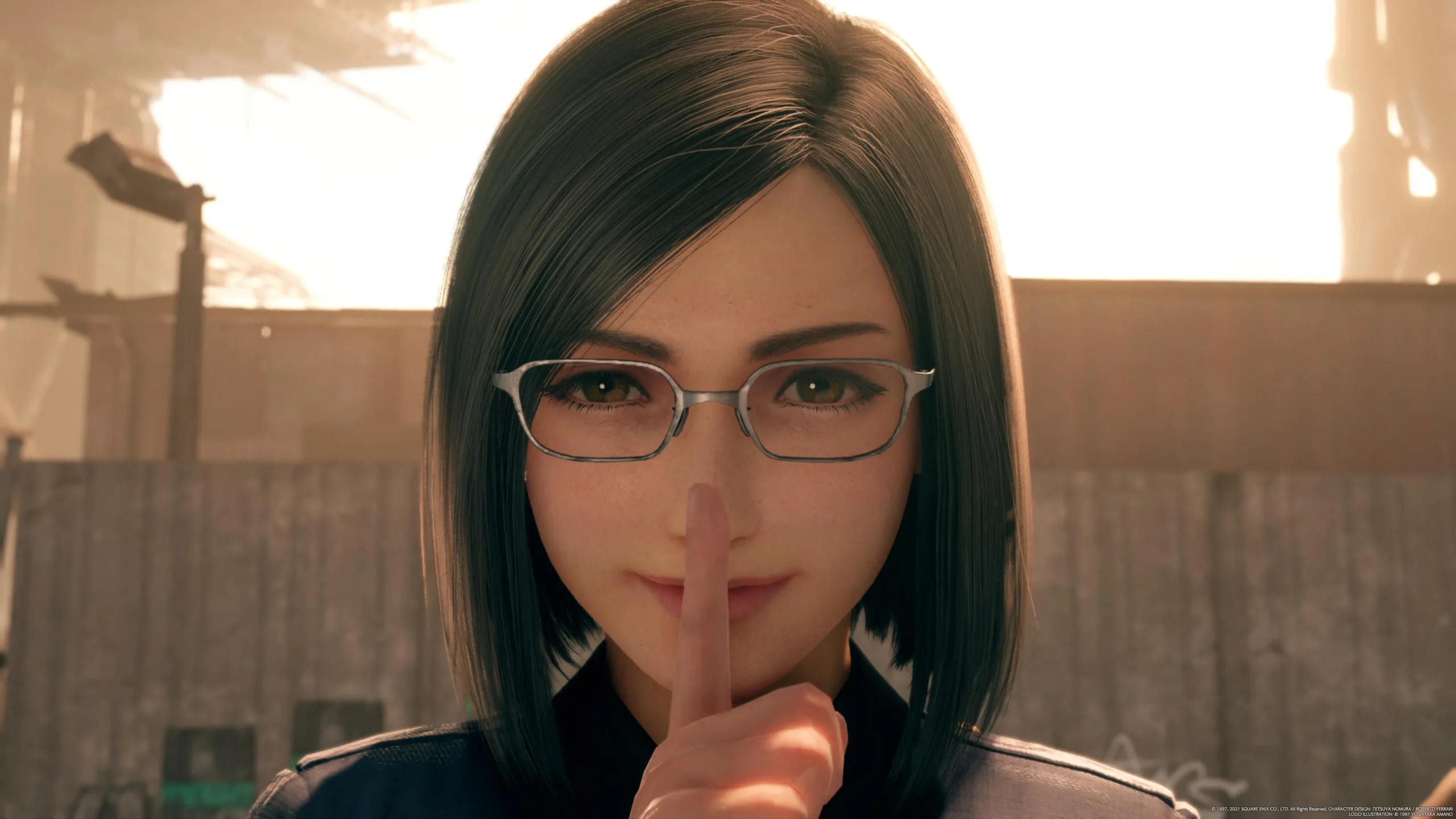
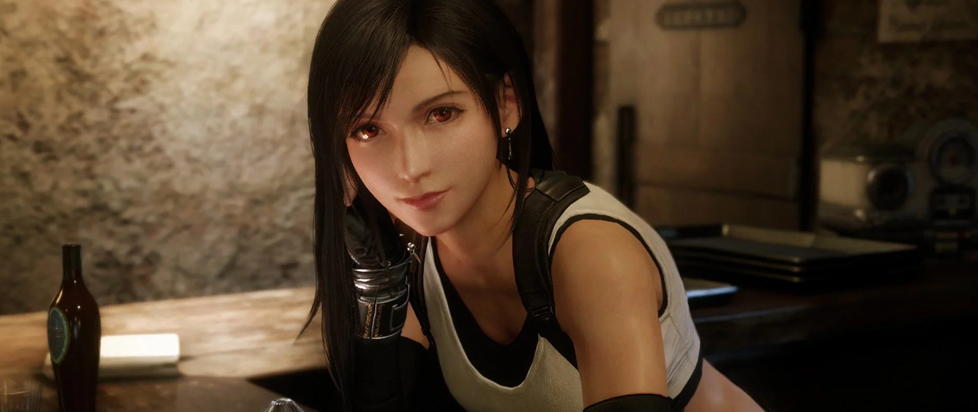
Take, for example, Tifa Lockhart in FF7 Remake and beyond. Tifa is one of the primary characters alongside Cloud and Aerith, and has substantial screen time and dialogue throughout the game. It is, therefore, a bit jarring to see her face replicated with basically no changes on other named characters, such as Elena (Tifa-but-blonde) and Nayo (Tifa-with-glasses, Clark Kent-style). Even the other major female characters with technically different facial features, such as Aerith and Yuffie, all bear a striking family resemblance that the male characters do not share. Models for male characters like Sephiroth, Cid, and Barret share a clear design sensibility that allows for unique visual characterization, while the only thing the female characters get to be, all narrative protestations of their strength to the contrary, is small and delicately pretty. And I’m sorry, but it’s kind of weird.
So, yeah, maybe this is once again a bit of a stretch if we’re viewing the horror lens of my column narrowly. But I stand firm in my assertion that re-using not just unimportant background models, but the models of key female characters, speaks poorly about the role of women in these games on multiple levels. Is this adherence to a particular female appearance a product of longstanding misogyny in the gaming community? (It definitely is.) Is the idea that if women don’t look a particular way, men won’t buy the game? With the current anti-woke platform of several influential gaming personalities, this isn’t necessarily an outlandish thought. Or is it the more abstract shackles of tradition and nostalgia leading to creatives being unwilling to innovate on a form?
Regardless of the market-capitalism reason why these women all look the same, it speaks clearly to the idea that in order for women to exist in games at all, there’s an almost impossible visual bar to clear. And in a time where misogyny and “traditional” (regressive) views on marriage, reproductive rights, and women’s roles in society are seeing a resurgence in young men worldwide, I’m hesitant to let anything, no matter how small, slide. If even the fake women have such narrow standards imposed upon them, I shudder to think about how it means men view the real thing.
———
Emma Kostopolus loves all things that go bump in the night. When not playing scary games, you can find her in the kitchen, scientifically perfecting the recipe for fudge brownies. She has an Instagram where she logs the food and art she makes, along with her many cats.
Sign up for the forthcoming weekly Unwinnable digest!