I Live for the A-HA Moment
Visit the MIT Press shop
This column is a reprint from Unwinnable Monthly #197. If you like what you see, grab the magazine for less than ten dollars, or subscribe and get all future magazines for half price.
———
Here’s the Thing is where Rob dumps his random thoughts and strong opinions on all manner of nerdy subjects – from videogames and movies to board games and toys.
———
Everyone who plays videogames derives satisfaction from something when they play them. Loads of people get their highs from besting a difficult boss in an action game, beating a super tough section in a platforming level and so on, with plenty of room for overlap. For me, my absolute favorite will probably always be finding some kind of reward after a bit of unguided exploration. But here’s the thing: While rewarding exploration might be my favorite thing, nothing else beats the feeling of figuring out how to do a thing in a game all on my own.
Okay, yes, that’s a super vague way to word this but what I’m talking about is the “A-HA!” moment. That point where you’re struggling to progress or complete a particular task or whatever and think to yourself “…I wonder what would happen if I tried this…” and it works! Sometimes it’s a gear change that makes an enemy encounter far more manageable; sometimes it’s finding just enough environmental clues to discern the answer to a puzzle; sometimes it’s finding an entirely different route to a location that bypasses difficult hazards.
It would be easy to slip into the low-hanging criticism of “modern games” (whatever that even means anymore these days) and all their hand-holding, but aside from being so obvious it’s also pretty disingenuous. Plenty of older games held hands in their own patronizing ways, and plenty of newer games don’t. What matters is the games themselves, and how they choose to – or rather, are designed to – subtly guide players to a conclusion. Or not guide them at all, sometimes.
What got me thinking about this is my recent forays through a few different and disparate games. Revisiting a popular open-world fantasy RPG (that shall remain nameless due to the ongoing BDS Boycott over Microsoft’s direct contributions to Palestinian genocide) I’ve had on my Switch for years had its own merits, but it’ difficult to say I felt particularly fulfilled by completing the various quests or even most of the exploration. Then I revisited that same company’s other open-world fantasy RPG from almost a decade prior and, despite the more limited scope due in no small part to the technological limitations of the early 2000s, managed to captivate and pull me in much more thoroughly and extremely quickly.
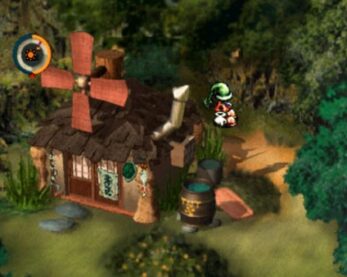
Then I realized a major reason for this: The older game had no on-screen compass and no quest markers dotting the interface. If an NPC told me I needed to go somewhere, I needed to ask them or someone else for directions before a vague dot would even appear on the world map – and that only applies to towns. Being tasked with exploring ancient ruins actually necessitated asking for directions and then regularly checking the journal to remind myself that I needed to make a left after crossing the bridge over a certain river, then take an immediate right at the next crossroads.
But that’s not really an “A-HA!” moment so much as a feeling of accomplishment after paying close attention to what the world was telling me. My actual moment came a bit later when I had trouble completing a quest. I needed to speak to a specific NPC about a particular subject, but they refused to listen to me when I first arrived. No other conversations topics came up – I just got shut down immediately and that was it. But after hours of doing other things elsewhere I came back and, on a whim, thought to myself, “I wonder if I’d have more luck by getting this person to like me more first?”
One spritz of insect pheromones (seriously) and a small bribe later, poof. All taken care of. Sure, on its face this sounds simple but keep in mind the game does nothing to indicate that this NPC’s opinion of you could have an impact on the job. Figuring this out on my own felt pretty neat.
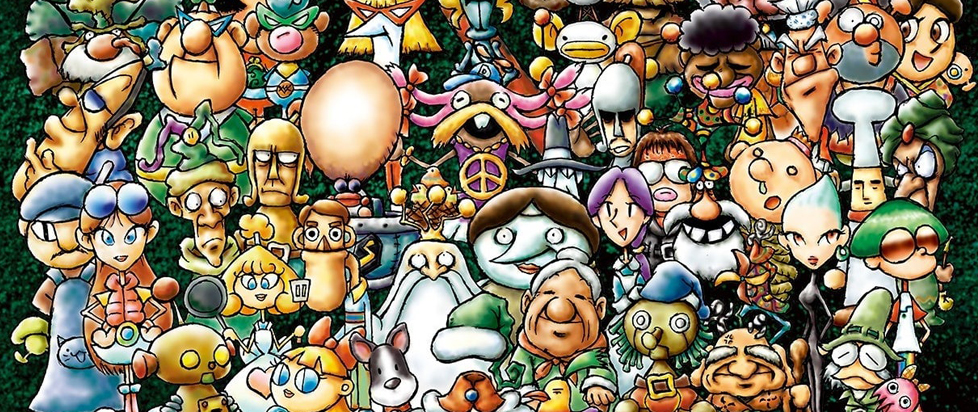
Then there’s Moon, a very weird anti-RPG made by the mad geniuses at Onion Games, which tasks the main character with wandering around the world cleaning up a stereotypical RPG hero’s mess. It’s pretty much all puzzles that depend on using specific items or being in an area at a particular time – or both. But because there’s no in-game hint system and characters don’t really spell anything out for you, you’re just kinda left to your own devices to put it all together.
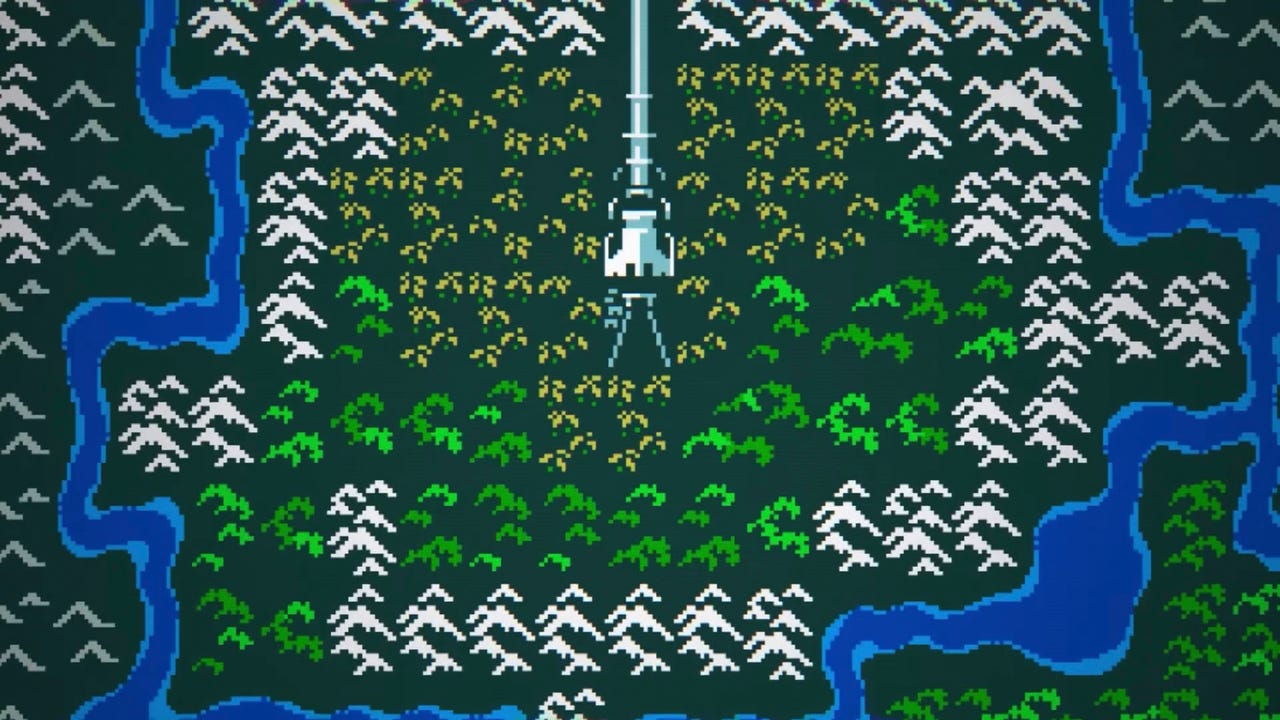
Moon is a tough nut to crack due to this design approach, no question, but the flood of endorphins that hit my brain when I took a shot in the dark about someone liking a certain musical instrument so much that I could get them to talk to me by playing music (via the diegetic in-game music player) that featured that same instrument in it was incredible. And it’s a game absolutely full of moments and puzzles like that.
Really, this kind of satisfaction is probably a big factor in why so many people (myself included) are fond of the “immersive sim” genre. Games like the original Deus Ex, the System Shock series and so on provide so many opportunities for players to experiment with different methods when trying to complete a task. Oftentimes those methods can vary wildly based on who’s in control, or even from playthrough to playthrough as one’s available gear or abilities might change.
Which brings me around to my latest re-obsession: Caves of Qud. That’s right, this is now a stealth Qud appreciation story! I’m not locked in here with you, you’re locked in here with me!
In all seriousness, though, I truly believe that one of the biggest – possibly the biggest – reasons for so many people’s fascination and obsession with Caves of Qud is because of how accommodating it is on a structural level to… I guess we can call it “players doing weird shit.” Practically every obstacle in the game can be surmounted in loads of different ways, some of which would probably be considered game-breaking or bug exploiting in other titles.
Not here, though.
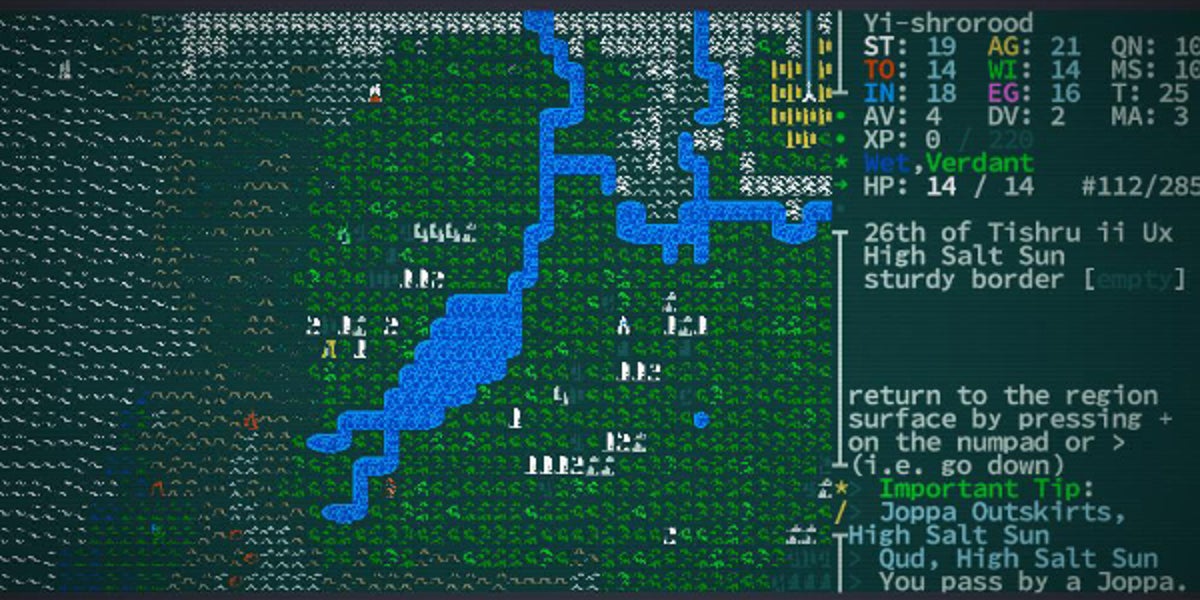
The impressive volume (and absurdity) of Qud’s idiosyncrasies has been the game’s marketing theme for years at this point – and for good reason. Stories about surreal gameplay moments are more likely to pop up in a typical internet search than actual gameplay tips at this point. But the wild thing is that none of those moments are exaggerated.
You can befriend a gnu and have them follow you and bring their entire cadre with them so now you’re the boss of a herd of antlered beasts. You can give the gnu armor, and possibly even a shotgun. You can inject what’s basically a love potion into a really difficult boss-like enemy (assuming you can get the needle through their armor) to immediately make them friendly. You can clone yourself. You can clone a party member. You can grow extra limbs and cut one of them off to use as a food source if you’re desperate. You can transfer your mind into a door.
Qud is a game that’s built for the “A-HA!” moment. Hell, even if you try something wacky and it doesn’t work, that may not mean that it’s actually a bad idea – maybe your shot missed or the angle was wrong or something else got in the way.
For years we’ve referred to open-world games where you can do random stuff as “sandboxes,” but honestly I’m not convinced that’s accurate. A true sandbox shouldn’t just let you experiment with various mechanics on a whim for the sake of chaos (and let’s be real, more often than not a quicksave reload after cackling at the results). It should encourage that experimentation – drive you to push it even further – by rewarding you with results. It should allow players to find the “A-HA!” for themselves, in whatever bizarre form that might take.
———
Rob Rich is a guy who’s loved nerdy stuff since the 80s, from videogames to Anime to Godzilla to Power Rangers toys to Transformers, and has had the good fortune of being able to write about them all. He’s also editor for the Games section of Exploits! You can still find him on Bluesky and Mastodon.