Corporations Steeped in Phraseology
No ads. No AI. So many bats.
This column is a reprint from Unwinnable Monthly #197. If you like what you see, grab the magazine for less than ten dollars, or subscribe and get all future magazines for half price.
———
Wide but shallow.
———
Another one of these extraction shooters in a sea of them sure felt like a waste of Marathon’s history, and potential. Drop in, drop out, zoom and run and fire along the way. Hoard a plump stack, just like in Destiny and The Division, tick little boxes over and over. Forever games pile up like ancient monoliths, their origins withering away, or per recent history, immediately collapsing under the immense weight of cancerous shareholder demands. What about Marathon (2026) was worth getting excited about, let alone cheering for?
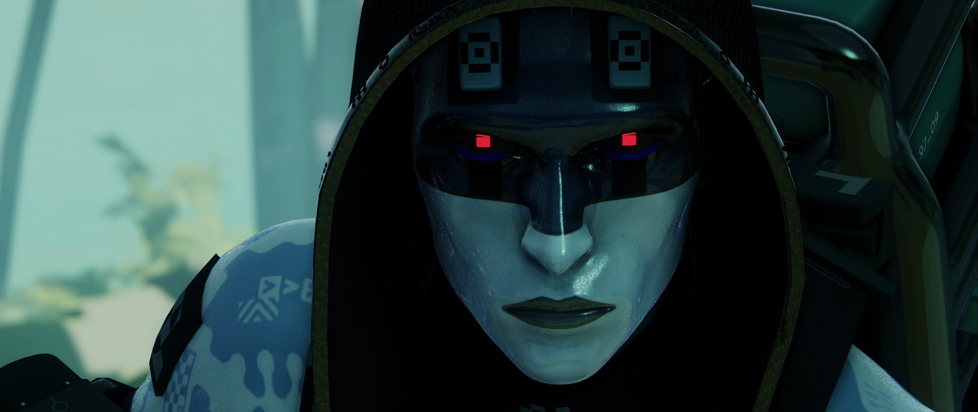
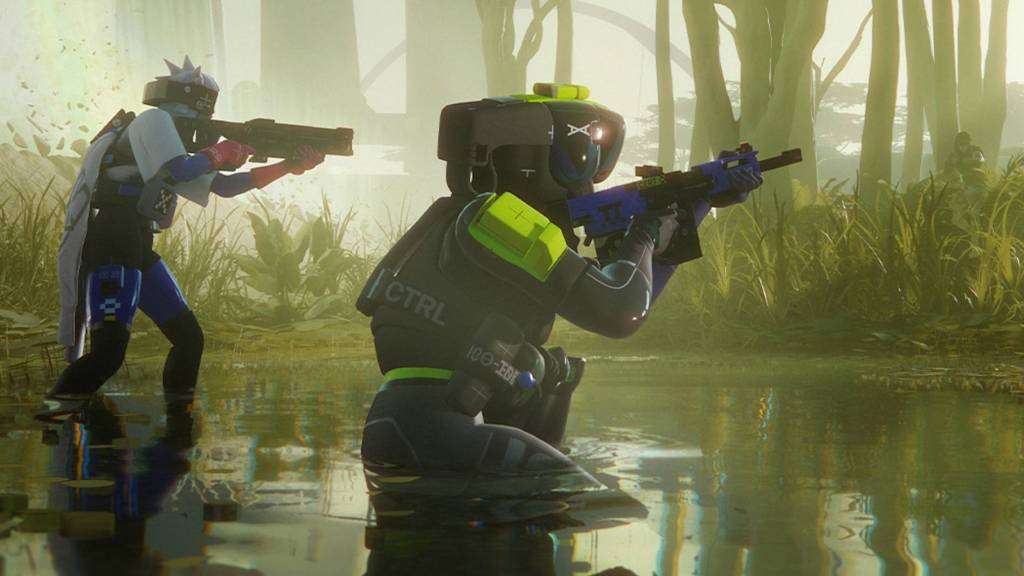
Some style at least. Typefaces which demand your attention. Loading videos making metaphor out of transmission of consciousness into a remote android body. Corporations steeped in phraseology, trade dress as much at war as any rifle or ability. Marathon looked and felt like something fresh from the jump, or at least different enough – on the ground the core remains the same as gun leads the way and we all search and scramble before the chaos gets too unmanageable or the clock leaves us behind.
But after decades of Bungie’s other franchises like Halo and Destiny, how novel could the shooter actually get? On the back of the box, it’s more space drama: A colony ship Marathon crash lands on an alien planet and it’s a magnet for mission-motivated mercs. Too far for a human to go from earth so a bunch of corps are zapping consciousnesses there to inhabit shells to do the scrounging. All LLCs for themselves and Earth’s unified government against everyone. Thin gruel, it seems at first, and perhaps it remains, because I’ve only tasted the server slam demo. Yet – I’m hooked, I’m hungry, I’m so keen that it feels necessary and exciting to dig out a headset with a microphone for the proximity chat after decades of muted teammates.
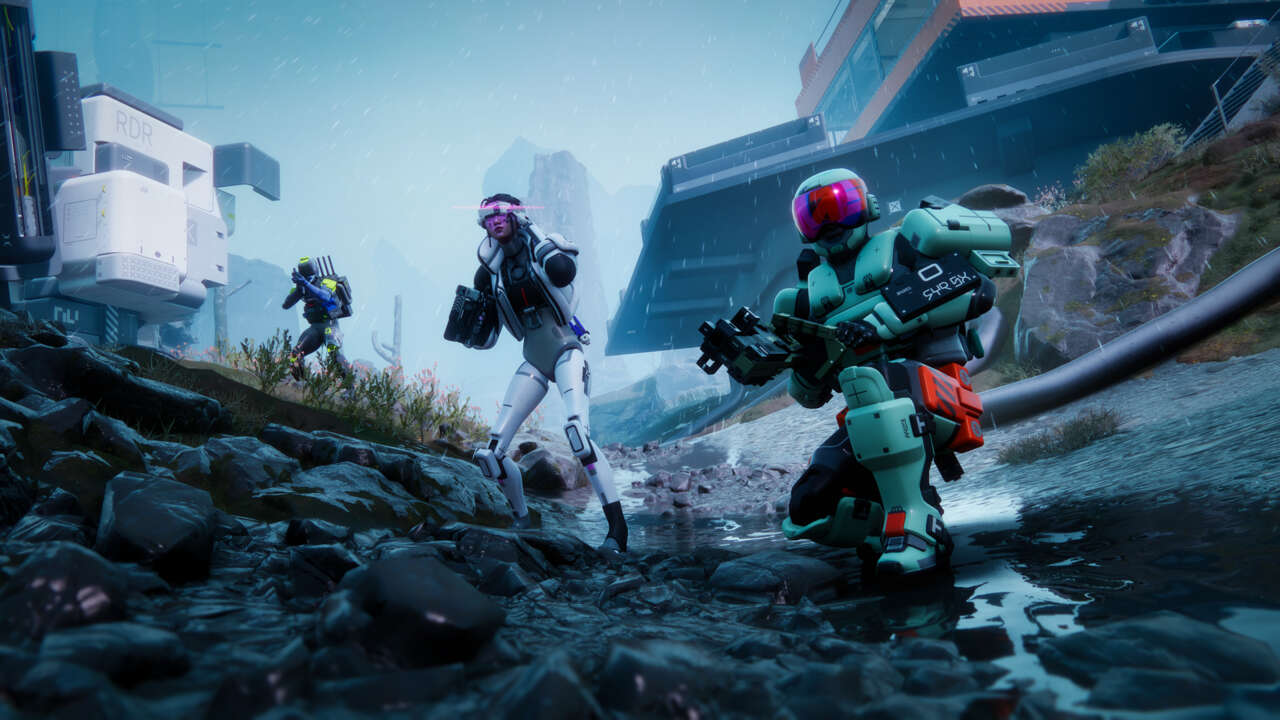
Those decades of experience are probably meaningful, with all of the game-elements locked in. Each variety of shell offers nuances for travel and controlling the field, and the guns with all their sharp angles pull up and fire away with all the sensory satisfaction that the medium affords. I would not be so bold as to claim that the shooter format leaves little to be cracked open, but here the fundamentals are as solid as ever, which is not a given.
An interesting tweak for me at least is the proximity chat. Despite how battle royales require a level of teamwork to get far and yet force you to play with some of the most asocial miscreants ever produced, the ability to be heard by all in-game (if you so choose) mixes up the dynamics of rivals. Sure, there’s taunting and trash talk, but there’s also chance to make friends out of foes, which allows for the most gradation between each playthrough. Beyond just a little information sharing, which is always a key contribution to the squad, calling out “Friendly!” to a rival crew just feels more civilized than pulling the trigger at every turn. Most of the time it won’t matter, they’ll dump a clip regardless. Sometimes they might play nice and then cut you down at the end, allowing for memorable “et tu Brutè?” But for those moments where, against instinct and supposed laws about survival and fitness, you and some enemies exfiltrate together because it’s the best option for everyone, or you spy an odd-looking robot that nods when you call out, or you just pass by like ships in the night minding your own mayhem – this is the juice.
How did three matches carry me through this? The menus were deliriously obtuse at first, wave after wave of information presented in multiple formats. Of course, this is how I’ve felt with Warzone and Fortnite for a while, but Marathon isn’t sending you down a hallway of mirrors hoping you empty your wallet in terror at every turn. It seems, at this early juncture, that the game is telling the fractured narrative throughout the interstices, in summaries about liquid cheeseburgers and UESC threats and faction alliances. Taking wee sips between games leans into the frenetic atmosphere, in a way balancing against the tense nature of making a run through the map that probably has one or two firefights at most, given that more time on the ground is more opportunity to lose everything.
Which is another part of Marathon’s dare. Many who are used to stealing their treasure and boxing it up until the end of time are upset that this game limits the scope of your hoarding, insisting that one utilize their ill-gotten gains, because what other choice do we have? On top of that, the current roadmap allows for a complete wipe after each three-month season, save for some cosmetic only items. I get the apprehension, losing what one worked so hard for, but even more so I appreciate Marathon’s insistence on the utility of its items. Of course, this means that when you take your best gear out, you’ll get stomped or mined nearly instantly, but sometimes that’s the way it goes – you may as well use it, since you’re losing it either way.
I haven’t even purchased this game yet, given that I’m away from my machines for a little bit during retail release, but I’m salivating for it. Marathon is threading the needle between art and service, a refreshingly bold work from a technical monolith. I can only hope it lives more than a few weeks, and even beyond that, thrives beyond human comprehension.
———
Levi Rubeck is a critic and poet currently living in the Boston area. Check his links at levirubeck.com.

Sign up for the forthcoming weekly Unwinnable digest!